Love this? Save it for later!
Share the inspiration with your friends
Introduction
“You won’t believe what happened in my garden last Thursday,” I told my neighbor as she peered over the fence. I’d been eyeing my tomato plants all week, watching the plump red fruits swell with each sunny afternoon. Then, bam—overnight, some of those gorgeous tomatoes had split open like little crimson explosions. Honestly, it looked like a tomato crime scene out there. I was baffled and a bit frustrated because these were supposed to be the best tomatoes I’d grown all season. Maybe you’ve been there too—when your late summer harvest suddenly turns into a puzzle of cracked fruit and wasted effort.
It turns out, tomato splitting is a pretty common garden mystery, especially as the summer edges toward fall. I wasn’t expecting to learn so much about water cycles, fruit skin elasticity, and garden timing just from watching my plants. But after some trial, error, and chatting with local gardeners, I finally pieced together why those fresh garden tomatoes split and how to keep it from ruining your harvest. Let me share what I found out so your late summer tomatoes can stay whole, juicy, and ready for your next batch of sauce or salads.
Why You’ll Love This Recipe
This guide isn’t just about pointing out what went wrong—it’s about helping you get the very best from your fresh garden tomatoes, even when the weather plays tricks.
- Quick & Easy Tips: Simple steps you can take right now to minimize cracking and save your harvest.
- Practical Advice: No need for fancy tools or complicated fixes—just gardening know-how that fits your routine.
- Perfect for Late Summer: Focused on that tricky time when tomatoes are ripe but weather is unpredictable.
- Garden-Tested: These tips come from hands-on experience and conversations with seasoned growers.
- Maximize Your Yield: Keep more tomatoes intact, so you get more flavor and less waste.
This isn’t just another garden tip list. It’s the kind of advice I wish I had before spotting those first cracked fruits. The special trick? Understanding how watering patterns and weather swings affect tomato skin tension. Once you get this, you’ll see your garden differently—and your tomatoes will thank you. I mean, who wants to pick up half-split tomatoes when you could have perfect ones staring back at you?
What Ingredients You Will Need
Okay, so this isn’t a recipe in the traditional sense, but to keep your fresh garden tomatoes splitting at bay, you’ll want some basics on hand to care for your plants.
- Tomato Plants: Choose crack-resistant varieties if possible, like ‘Roma’ or ‘Celebrity’ which tend to hold up better in wet conditions.
- Quality Soil: Rich, well-draining soil helps regulate moisture and supports steady fruit growth.
- Mulch: Organic mulch like straw or shredded leaves keeps soil moisture consistent and reduces sudden water spikes.
- Watering Tools: A soaker hose or drip irrigation system for controlled watering. Avoid overhead watering, which can shock the plant.
- Fertilizer: Balanced tomato fertilizer with a low nitrogen content (too much nitrogen can cause rapid growth and increase splitting).
- Garden Stakes or Cages: To support plants and keep fruits off the ground, reducing damage risk.
Most of these are typical garden staples, but a few thoughtful choices—like using mulch and drip irrigation—make a big difference. I personally like Espoma Tomato-tone fertilizer for its natural ingredients. And if you’re trying to save water, a timed drip system is a game-changer for keeping moisture stable without fuss.
For late summer tomato care, consistency is the name of the game. Oh, and don’t forget your trusty watering can for those in-between days when you want to hand water gently.
Equipment Needed
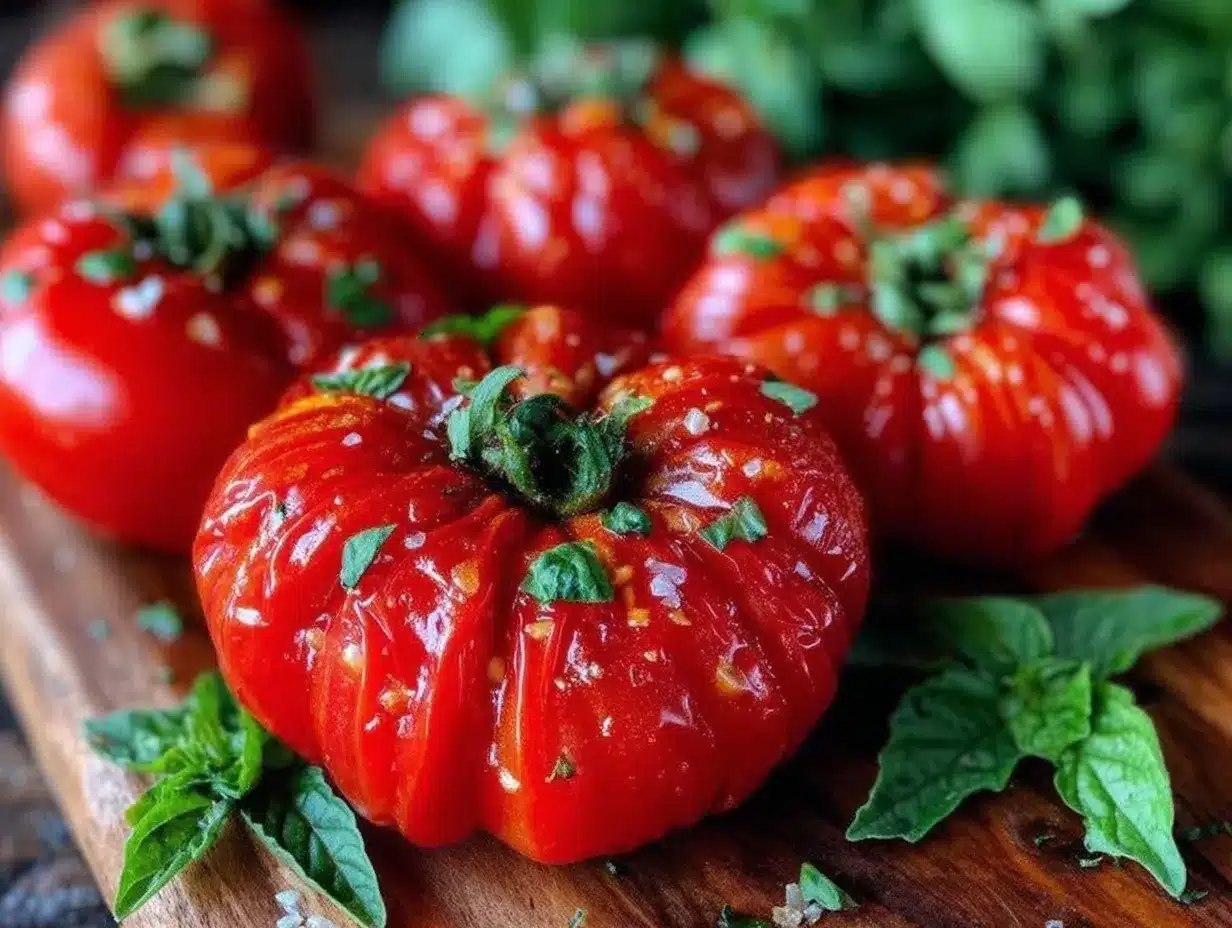
- Garden Gloves: Protect your hands while pruning or harvesting.
- Pruning Shears: Sharp, clean shears help remove suckers and damaged leaves to improve air circulation.
- Soaker Hose or Drip Irrigation: These tools deliver water slowly at the soil level, preventing sudden moisture swings that cause splitting.
- Mulching Materials: Straw, shredded leaves, or compost to cover soil and regulate moisture.
- Tomato Cages or Stakes: Support your plants to keep fruit off the ground and reduce bruising risk.
- Garden Trowel: Useful for soil aeration and applying fertilizer around plant bases.
If you don’t have a soaker hose, a regular hose with a gentle spray nozzle works in a pinch, but be mindful of how much water you’re delivering. I’ve found that even basic pruning shears can make a difference in plant health—just keep them clean to avoid spreading disease. And while mulching might sound like extra work, trust me, it’s worth it for the tomato skin integrity alone.
Preparation Method
- Choose the Right Tomato Varieties: Start by selecting varieties known for crack resistance. For example, ‘Roma’ and ‘San Marzano’ tomatoes have thicker skins that hold up better against moisture changes. (10 minutes)
- Prepare Your Soil: Make sure your soil is rich and drains well. Amend with compost or organic matter to improve texture. Avoid waterlogged conditions that can stress plants. (30 minutes)
- Plant and Support Properly: Space tomato plants about 24-36 inches (60-90 cm) apart to encourage airflow. Use cages or stakes to keep plants upright and fruits off damp soil. (15 minutes)
- Apply Mulch: Spread a 2-3 inch (5-8 cm) layer of organic mulch around your plants. Mulch helps keep moisture even and reduces direct soil splash on fruits. (20 minutes)
- Water Consistently: Water deeply but less frequently, aiming for about 1-2 inches (2.5-5 cm) per week. Use drip irrigation or soaker hoses to avoid wetting leaves and fruit. Early morning watering is best to allow foliage to dry. (5-10 minutes daily)
- Monitor Weather Patterns: If heavy rain is forecasted, try to cover plants with a breathable garden fabric to reduce water soaking. After rain, check plants for signs of splitting and harvest ripe fruit promptly. (ongoing)
- Fertilize Carefully: Use a balanced fertilizer with lower nitrogen to avoid rapid, uneven fruit growth. Apply according to package instructions every 3-4 weeks during the growing season. (10 minutes)
- Prune Suckers and Excess Foliage: Remove side shoots below the first flower cluster to promote air circulation and reduce humidity around fruits. (10 minutes weekly)
- Harvest Regularly: Pick ripe tomatoes as soon as they show full color. Overripe fruit left on the vine is more prone to splitting. (15 minutes every few days)
- Inspect for Splits: If you notice splitting, harvest those tomatoes immediately to avoid pests and rot. Use split tomatoes quickly in sauces or fresh dishes. (ongoing)
Trust me, the timing on watering is a game-changer. I once watered my tomatoes late in the afternoon, and by morning, half of them were cracked open. You’ll want to get into a rhythm that keeps moisture steady but not excessive. Also, don’t be shy about pruning; it can feel like a lot at first, but it really pays off by reducing humidity and disease risk.
Cooking Tips & Techniques
When dealing with fresh garden tomatoes splitting, the goal is prevention, but there are some handy techniques for when you do encounter those cracks.
- Pick Early, Ripen Indoors: If rain is heavy or you spot early splitting signs, harvest tomatoes a little before full ripeness and let them finish off the vine indoors. This reduces crack risk and still gives great flavor.
- Use Split Tomatoes Quickly: Slightly cracked tomatoes are perfect for sauces, soups, or roasting. Their juices add depth, and they cook down beautifully.
- Consistent Watering is Key: Avoid dry spells followed by heavy watering. If you have to water after a dry spell, do it gradually over a couple of days.
- Mulch is Your Friend: Mulching keeps soil moisture stable and reduces water splash, which can cause skin damage and promote cracking.
- Support Your Plants: Keeping tomatoes off the ground with cages or stakes reduces bruising and rot on split fruit.
One thing I learned the hard way: rushing to water after a heatwave can backfire if you soak your plants all at once. I’ve found that slow, steady moisture is what keeps tomato skins happy. Plus, picking off split tomatoes quickly saves you from a bigger mess later on (and avoids inviting bugs). It’s a bit like a dance with your garden—timing and attention make all the difference.
Variations & Adaptations
Not all gardens are alike, and your approach to managing tomato splitting can flex with your conditions and preferences.
- Container Gardening Variation: If you grow tomatoes in pots, be extra vigilant with watering—containers dry out fast but also flood quickly. Use well-draining soil and self-watering containers if possible.
- Organic Gardeners: Stick to organic mulch like straw and natural fertilizers. Compost teas can boost soil health and improve plant resilience.
- Drought-Prone Areas: Consider drought-tolerant tomato varieties and use thick mulch layers to conserve soil moisture. Water early and less frequently but deeply to encourage strong roots.
- Cold Climate Adaptation: Use row covers or greenhouses to protect plants from sudden weather swings that cause cracking.
- Personal Twist: I once tried a homemade seaweed fertilizer mix during a particularly wet summer. It seemed to toughen up the tomato skins, though that might be more garden folklore than science. Still, it was fun to try!
Adjusting your techniques to your unique garden conditions is key. For example, if your soil tends to retain water, you’ll want to be cautious about overwatering. Meanwhile, those in hot, dry climates might find shade cloth helpful to prevent sun damage and moisture loss. Whatever your setup, keeping an eye on your plants daily helps catch issues before they turn into a split tomato tragedy.
Serving & Storage Suggestions
Once you’ve got your fresh garden tomatoes without splits—or have gathered your harvest despite a few cracks—here’s how to enjoy and store them.
- Serving: Fresh tomatoes shine best at room temperature. Let them sit out for about 30 minutes before slicing to bring out their flavor.
- Presentation: Slice thick for salads or serve halved with a drizzle of olive oil and fresh herbs. Use split or softer tomatoes in cooked dishes like sauces, soups, or stews.
- Storage: Store ripe tomatoes on the counter away from direct sunlight. If you must refrigerate, do so only after they’re fully ripe to avoid flavor loss.
- Reheating: When using split tomatoes in sauces, simmer gently to concentrate flavors without burning.
- Flavor Development: Tomatoes continue to develop sweetness a bit after picking, so don’t rush to use every single one immediately unless they’re split.
Late summer tomatoes are a special treat. I love pairing them with fresh basil and a sprinkle of sea salt for a simple snack or tossing them into a roasted garlic chicken dish for a juicy burst of flavor. Just don’t forget to pick them before they split—that’s the real secret to enjoying them at their best.
Nutritional Information & Benefits
Fresh garden tomatoes are a nutritional powerhouse, loaded with vitamins and antioxidants. Here’s a quick snapshot:
- Rich in Vitamin C and potassium, supporting immune function and heart health.
- High in lycopene, a powerful antioxidant linked to reduced risk of certain cancers.
- Low in calories and naturally hydrating thanks to their high water content.
- Gluten-free, vegan, and perfect for a variety of diets.
- Provide dietary fiber, aiding digestion and satiety.
From a wellness perspective, I appreciate tomatoes for their fresh, vibrant flavor that encourages eating more veggies. Whether raw or cooked, they bring color and nutrition to every plate. Just watch for allergies or sensitivities, though those are pretty rare.
Conclusion
So there you have it—why fresh garden tomatoes split in late summer and how you can keep your harvest intact. With just a bit of attention to watering, pruning, and timing, you can protect your tomatoes from those frustrating cracks and enjoy more juicy, beautiful fruit.
I love this guide because it’s not about perfect gardens, but smart, realistic gardening. I still make mistakes (who doesn’t?), but these tips have saved me from losing whole batches more than once. Now, I’m curious—how do your tomatoes grow? Feel free to share your tips, stories, or even your tomato triumphs and fails in the comments below. Let’s keep our gardens thriving together!
FAQs About Fresh Garden Tomatoes Splitting
Why do my garden tomatoes suddenly split?
Tomatoes split because of rapid water intake, often after dry periods followed by heavy rain or watering. The fruit’s skin can’t expand quickly enough, causing cracks.
Can I still use split tomatoes?
Yes! Split tomatoes are great for cooking—use them in sauces, soups, or stews since their texture is less ideal for fresh eating.
How often should I water tomatoes to prevent splitting?
Water deeply and consistently, about 1-2 inches per week, preferably in the morning. Avoid letting plants dry out completely between waterings.
Are some tomato varieties less prone to splitting?
Absolutely. Roma, Celebrity, and San Marzano tomatoes generally have thicker skins and are more resistant to cracking.
Does mulching really help stop tomato splitting?
Yes, mulch helps keep soil moisture even and prevents water from splashing onto the fruit, which can cause skin damage and splits.
Pin This Recipe!
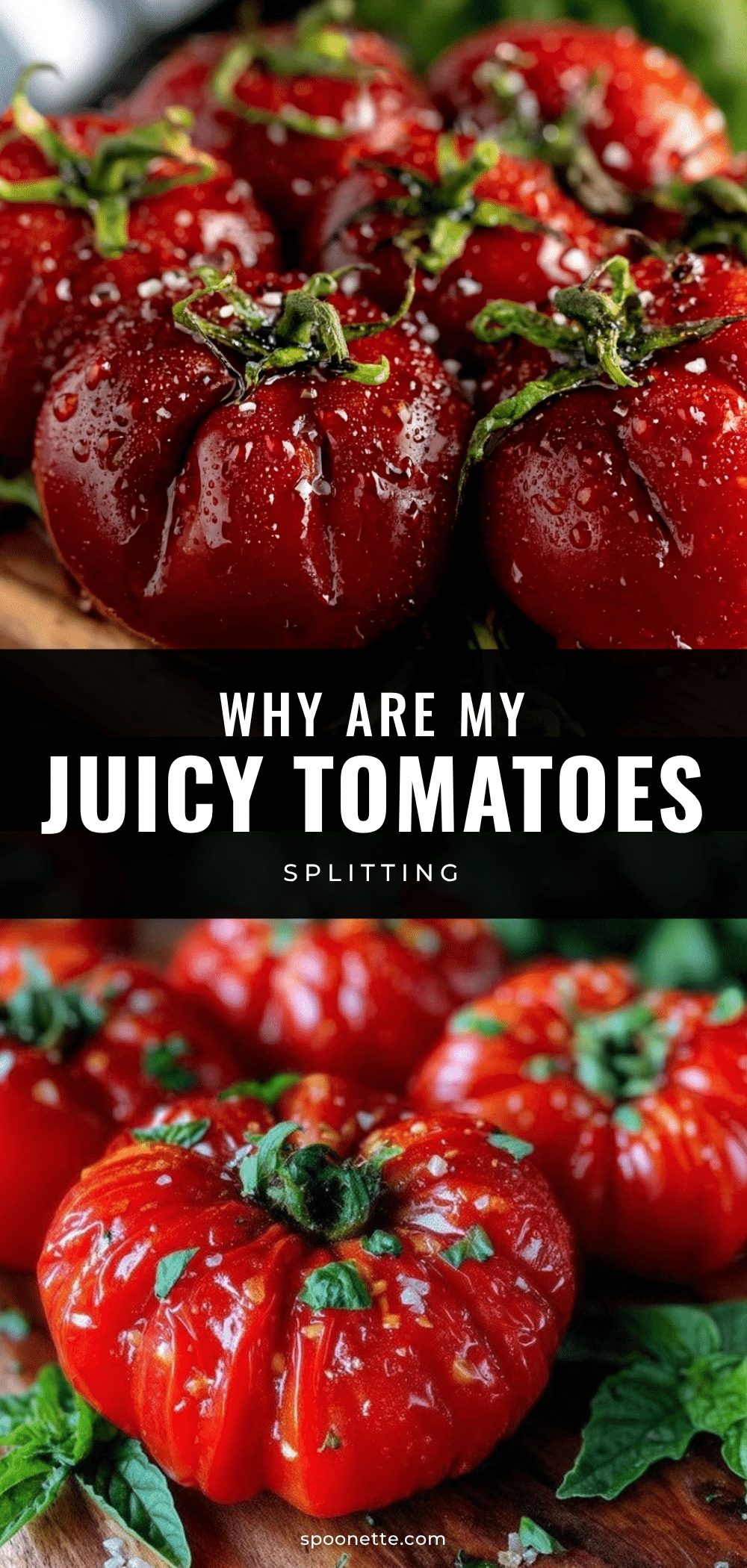
Fresh Garden Tomatoes Splitting Explained Easy Tips to Prevent Cracking Late Summer
Learn why fresh garden tomatoes split in late summer and discover easy, practical tips to prevent cracking and maximize your harvest.
- Prep Time: 1 hour 30 minutes
- Cook Time: N/A
- Total Time: N/A
- Yield: Varies depending on garden size
- Category: Gardening Tips
- Cuisine: N/A
Ingredients
- Tomato Plants (preferably crack-resistant varieties like ‘Roma’ or ‘Celebrity’)
- Quality soil (rich, well-draining)
- Organic mulch (straw or shredded leaves)
- Watering tools (soaker hose or drip irrigation system)
- Balanced tomato fertilizer with low nitrogen content
- Garden stakes or cages
Instructions
- Choose the right tomato varieties known for crack resistance, such as ‘Roma’ and ‘San Marzano’.
- Prepare your soil by ensuring it is rich and drains well; amend with compost or organic matter.
- Plant tomato plants 24-36 inches apart to encourage airflow and support with cages or stakes.
- Apply a 2-3 inch layer of organic mulch around plants to keep moisture even and reduce soil splash.
- Water deeply but less frequently, aiming for about 1-2 inches per week using drip irrigation or soaker hoses; water early in the morning.
- Monitor weather patterns and cover plants with breathable garden fabric if heavy rain is forecasted.
- Fertilize carefully with a balanced fertilizer low in nitrogen every 3-4 weeks during the growing season.
- Prune suckers and excess foliage weekly to promote air circulation and reduce humidity.
- Harvest ripe tomatoes regularly as soon as they show full color to prevent overripe fruit splitting.
- Inspect for splits and harvest split tomatoes immediately to avoid pests and rot; use split tomatoes quickly in sauces or fresh dishes.
Notes
Water tomatoes consistently and avoid sudden moisture spikes. Prune regularly to improve air circulation and reduce humidity. Pick tomatoes early if rain is heavy and ripen indoors to prevent splitting. Use split tomatoes quickly in cooked dishes. Mulching and drip irrigation are key to maintaining steady soil moisture.
Nutrition
- Serving Size: One medium tomato
- Calories: 22
- Sugar: 3.2
- Sodium: 6
- Fat: 0.2
- Carbohydrates: 4.8
- Fiber: 1.5
- Protein: 1.1
Keywords: fresh garden tomatoes, tomato splitting, prevent tomato cracking, late summer tomatoes, tomato care tips, gardening tomatoes, crack-resistant tomatoes