Love this? Save it for later!
Share the inspiration with your friends
I wasn’t expecting cooking advice from a plumber, but there I was, knee-deep in a kitchen renovation disaster, listening to Frank explain exactly how to make his grandmother’s poor man’s stew. The floorboards were ripped up, dust coated everything I owned, and I was pretty sure I’d never eat a proper meal again. Frank, who had been silently fixing pipes for two hours, suddenly looked up and said, “You know what you need? A pot of my Nonna’s beef and potato stew. Costs next to nothing, fills you up, and makes you forget your kitchen looks like a war zone.”
He scribbled the ingredients on a scrap of drywall—I’m not kidding—and handed it to me like it was a treasure map. Honestly, I was skeptical. The ingredient list was so simple it barely qualified as a recipe. But that night, standing over a borrowed hot plate, I made it. And let me tell you, the smell alone made me forget the missing cabinets and the hole in the wall. That first spoonful was warm, hearty, and exactly what I needed. Maybe you’ve been there—when life is messy and all you want is something simple that feels like a hug in a bowl.
This poor man’s beef and potato stew isn’t fancy. It doesn’t pretend to be. But it’s the kind of recipe that sticks with you, the one you make when you need comfort without the fuss. I’ve been making it for years now, through renovations and holidays and lazy Sundays. It never fails to deliver.
Why You’ll Love This Recipe
Let’s face it—we all need recipes that work hard without making us work hard. This poor man’s beef and potato stew is exactly that. I’ve tested it a dozen times, tweaked the seasonings, and even brought it to a potluck where it disappeared before the fancy pasta salad. Here’s why it’s a keeper:
- Quick & Easy: Comes together in under an hour, perfect for busy weeknights when you need dinner on the table fast.
- Simple Ingredients: No fancy grocery trips needed. You likely have most of these items in your pantry right now.
- Perfect for Cozy Nights: Great for chilly evenings, lazy weekends, or when you need a little comfort after a long day.
- Crowd-Pleaser: Always gets rave reviews from kids and adults alike. Even picky eaters ask for seconds.
- Unbelievably Delicious: The way the beef gets tender and the potatoes soak up all that savory broth is next-level comfort food.
What makes this recipe different? It’s the technique—browning the beef in batches so you get that deep, caramelized flavor, then letting everything simmer until the broth thickens naturally. No fancy roux, no heavy cream. Just pure, honest flavor. This isn’t just another stew recipe; it’s my best version, perfected through plenty of trial and error (and a few burnt pots).
This stew is the kind that makes you close your eyes after the first bite. It’s comfort food reimagined—simpler, faster, but with the same soul-soothing satisfaction. Perfect for impressing guests without stress, or turning a simple Tuesday into something memorable.
What Ingredients You Will Need
This recipe uses simple, wholesome ingredients to deliver bold flavor and satisfying texture without the fuss. Most are pantry staples, making this an easy last-minute meal.
- Beef chuck or stew meat, cut into 1-inch cubes (1.5 lbs / 680g) — (look for well-marbled pieces for the most tenderness)
- Russet potatoes, peeled and diced (4 medium, about 2 lbs / 900g) — (they hold their shape but get creamy inside)
- Yellow onion, diced (1 large) — (adds sweetness as it cooks down)
- Garlic cloves, minced (3 cloves) — (use fresh for best flavor)
- Carrots, peeled and sliced (2 medium) — (adds natural sweetness and color)
- Celery stalks, sliced (2 stalks) — (adds savory depth)
- Beef broth (4 cups / 960ml) — (I recommend low-sodium so you can control the salt)
- Canned diced tomatoes, undrained (1 can, 14.5 oz / 411g) — (adds acidity and richness)
- Tomato paste (2 tablespoons) — (adds deep, concentrated flavor)
- Worcestershire sauce (1 tablespoon) — (adds umami and depth)
- Dried thyme (1 teaspoon) — (earthy and aromatic)
- Dried rosemary (1/2 teaspoon) — (piney and fragrant)
- Bay leaves (2 leaves) — (adds subtle herbal notes)
- Olive oil (2 tablespoons) — (for browning the beef)
- Salt and black pepper (to taste) — (season as you go for best flavor)
- All-purpose flour (2 tablespoons, optional) — (for thickening, if desired)
- Fresh parsley, chopped (for garnish, optional) — (adds a fresh finish)
Ingredient Tips: For the best texture, look for beef chuck that has good marbling—it breaks down beautifully during simmering. I prefer Russet potatoes for their fluffy interior, but Yukon Golds work well too. If you’re out of fresh garlic, use 1 teaspoon of garlic powder instead. For a deeper flavor, try adding a splash of red wine when you add the broth—it’s optional but lovely.
Equipment Needed
You don’t need a fancy kitchen to make this stew. Here’s what you’ll need:
- Large Dutch oven or heavy-bottomed pot (5-6 quart capacity) — (distributes heat evenly for even cooking)
- Sharp chef’s knife — (for cutting beef and vegetables into uniform pieces)
- Cutting board — (preferably large enough to hold all your prepped ingredients)
- Wooden spoon or spatula — (for stirring and scraping up browned bits)
- Measuring cups and spoons — (for accurate ingredient amounts)
- Ladle — (for serving)
Alternative Suggestions: If you don’t have a Dutch oven, any large, heavy-bottomed pot will work—just keep an eye on the heat to prevent scorching. A slow cooker or Instant Pot can also be used (see Variations section). I’ve made this in a cheap stainless steel pot before, and it turned out just fine. The key is giving yourself enough space to brown the beef properly.
Personal Note: I’ve been using the same enameled Dutch oven for years now, and it’s worth every penny. But honestly, my first few batches were made in a hand-me-down pot with a wobbly lid. The stew still came out great. Don’t let equipment hold you back.
Preparation Method
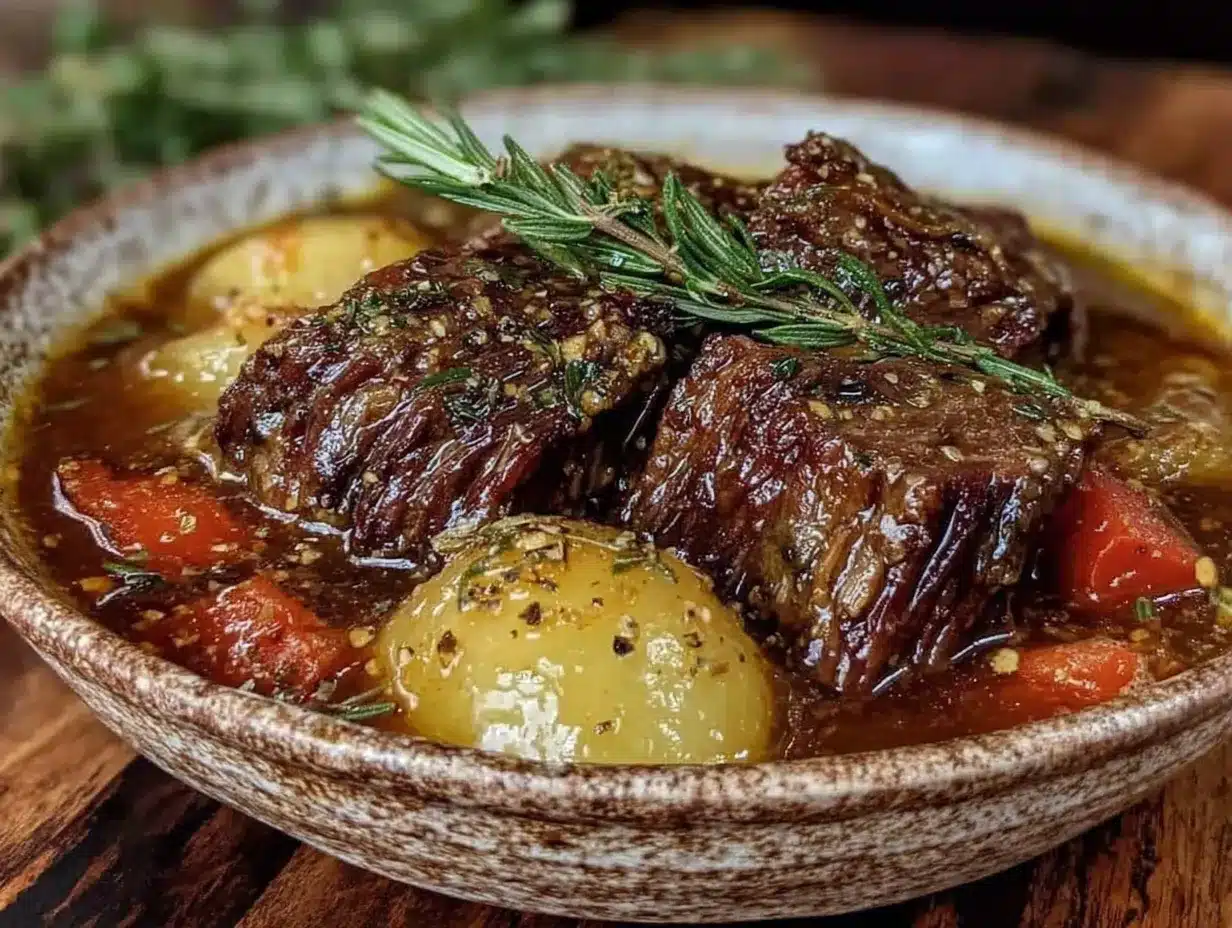
Follow these steps carefully, and you’ll have a pot of rich, hearty stew that tastes like it simmered all day.
- Prep the ingredients: Pat the beef cubes dry with paper towels. This is crucial for good browning. Season generously with salt and pepper. Dice the onion, mince the garlic, and slice the carrots and celery. Peel and dice the potatoes into 1-inch cubes. Set everything nearby—the cooking moves fast once you start.
- Brown the beef (5-7 minutes): Heat 1 tablespoon of olive oil in your Dutch oven over medium-high heat. Add half the beef cubes in a single layer—don’t crowd the pot. Let them sear undisturbed for 2-3 minutes until deeply browned. Flip and brown the other side. Transfer to a plate and repeat with remaining oil and beef. This step builds the foundation of flavor, so don’t rush it.
- Sauté the aromatics (3-4 minutes): Reduce heat to medium. Add the diced onion to the pot and cook for 2 minutes, scraping up any browned bits from the bottom. Add the garlic, carrots, and celery. Cook for another 1-2 minutes until the onions are translucent and the vegetables start to soften.
- Add the tomato paste and seasonings (1 minute): Stir in the tomato paste, dried thyme, and dried rosemary. Cook for 1 minute, stirring constantly. This deepens the flavor and removes any raw taste from the paste.
- Deglaze the pot (1 minute): Pour in the Worcestershire sauce and stir, scraping up any remaining browned bits from the bottom of the pot. These bits are pure flavor gold.
- Add the liquids and beef (5 minutes): Return the browned beef to the pot. Add the beef broth and undrained diced tomatoes. Stir everything together, making sure the beef is mostly submerged. Add the bay leaves.
- Simmer the stew (30-35 minutes): Bring the stew to a gentle boil, then reduce heat to low. Cover and let it simmer for 20 minutes. The broth should be bubbling gently, not boiling hard. After 20 minutes, add the diced potatoes. Stir gently, cover again, and simmer for another 10-15 minutes, or until the potatoes are fork-tender.
- Thicken the broth (optional, 2 minutes): If you prefer a thicker stew, mix 2 tablespoons of flour with 3 tablespoons of cold water in a small bowl until smooth. Stir this slurry into the simmering stew and cook for 2-3 minutes until thickened.
- Season and serve: Remove the bay leaves. Taste the stew and adjust salt and pepper as needed. The broth should be rich, savory, and slightly thickened. Ladle into bowls and garnish with fresh parsley if desired.
Sensory Cues: When properly browned, the beef should have a deep mahogany crust. The broth should look rich and slightly opaque, not watery. The potatoes should offer slight resistance when pierced with a fork but not fall apart. The smell—oh, the smell—should fill your kitchen with warmth and make everyone wander in asking what’s for dinner.
Cooking Tips & Techniques
I’ve learned these lessons the hard way, so you don’t have to.
- Don’t skip browning the beef: I know it’s tempting to just dump everything in the pot and walk away. But browning the beef in batches creates a deep, savory flavor that you simply can’t get any other way. Those browned bits stuck to the bottom of the pot are the secret to a rich broth.
- Pat the beef dry: Wet beef won’t brown—it’ll steam. Take the extra 30 seconds to pat the cubes dry with paper towels. It makes a noticeable difference.
- Cut vegetables uniformly: Aim for similar-sized pieces so everything cooks evenly. I’ve had batches where the carrots were mush and the potatoes were still crunchy. Not fun.
- Season as you go: Add salt and pepper at multiple stages—when browning the beef, when sautéing the vegetables, and at the end. Layering the seasoning creates a more complex flavor profile.
- Don’t rush the simmer: Low and slow is the way to go. A hard boil will toughen the beef and break down the potatoes into mush. Keep it at a gentle simmer for the most tender results.
- Let it rest: The stew tastes even better the next day. The flavors meld and deepen overnight. Make it ahead if you can—your future self will thank you.
- Common mistake to avoid: Adding the potatoes too early. They’ll turn to mush before the beef is tender. Give the beef a head start, then add the potatoes for the last 15 minutes of cooking.
Personal Failure: I once tried to rush this stew by cranking the heat to high. The beef turned out tough, the potatoes disintegrated, and the broth was cloudy. My husband ate it without complaint, but I knew. Learn from my impatience—low heat is your friend.
Variations & Adaptations
This recipe is forgiving and flexible. Here are some ways to make it your own:
- Slow Cooker Version: Brown the beef and sauté the aromatics on the stovetop first, then transfer everything (except the potatoes) to a slow cooker. Cook on low for 6-8 hours or high for 3-4 hours. Add the potatoes during the last 45 minutes of cooking.
- Instant Pot Version: Use the sauté function to brown the beef and cook the aromatics. Add all ingredients except the potatoes. Pressure cook on high for 25 minutes. Quick release, add the potatoes, and pressure cook for another 5 minutes.
- Vegetarian Adaptation: Swap the beef for 2 cans of drained chickpeas or 1.5 cups of cooked lentils. Use vegetable broth instead of beef broth. The cooking time reduces to about 20 minutes total.
- Add More Vegetables: Toss in a cup of frozen peas or green beans during the last 5 minutes of cooking. Or add a diced zucchini with the potatoes for extra nutrition.
- Spicy Twist: Add 1/2 teaspoon of red pepper flakes or a diced jalapeño with the onions for some heat. A dash of hot sauce at the end works too.
- Herb Swap: No thyme or rosemary? Use 1 teaspoon of dried oregano or Italian seasoning instead. Fresh herbs work too—double the amount if using fresh.
Personal Variation: I once added a cup of leftover red wine instead of some of the broth. It was incredible. The wine added a depth that made the stew taste like it had been simmering for hours.
Serving & Storage Suggestions
This stew is wonderfully versatile when it comes to serving.
- Serving Temperature: Serve piping hot, straight from the pot. The steam rising from the bowl is half the experience.
- Presentation: Ladle into deep bowls and garnish with fresh parsley. A sprinkle of black pepper on top adds a nice finish. Serve with crusty bread for dipping—it’s practically mandatory.
- Complementary Dishes: A simple side salad with a tangy vinaigrette cuts through the richness. Buttered egg noodles or mashed potatoes are also excellent companions. For drinks, a full-bodied red wine or a cold dark beer pairs beautifully.
- Storage: Let the stew cool completely before storing. Transfer to an airtight container and refrigerate for up to 4 days. The flavors actually improve after a day or two.
- Freezing: This stew freezes beautifully. Portion it into freezer-safe containers or zip-top bags. Leave a little room for expansion. Freeze for up to 3 months. Thaw overnight in the refrigerator before reheating.
- Reheating: Reheat gently on the stovetop over medium-low heat, stirring occasionally. Add a splash of broth or water if the stew has thickened too much. You can also microwave individual portions in 30-second bursts, stirring in between.
Flavor Development: Honestly, this stew is always better the next day. The beef absorbs more flavor, the broth thickens, and everything melds together beautifully. I often make it a day ahead on purpose.
Nutritional Information & Benefits
Here’s an approximate nutritional breakdown per serving (based on 6 servings):
| Nutrient | Amount per Serving |
|---|---|
| Calories | 385 |
| Protein | 32g |
| Fat | 14g |
| Carbohydrates | 32g |
| Fiber | 5g |
| Sugar | 7g |
| Sodium | 680mg |
- Health Benefits: This stew is packed with protein from the beef, which helps keep you full and supports muscle health. Potatoes provide resistant starch, which is great for gut health when cooled and reheated. Carrots and celery add vitamins A and K, plus antioxidants.
- Dietary Considerations: This recipe is naturally gluten-free if you skip the flour thickener. It’s also dairy-free and nut-free. For a lower-sodium version, use unsalted broth and reduce added salt.
- Allergen Note: Contains wheat if using the flour thickener. Worcestershire sauce may contain anchovies and soy—check labels if you have allergies.
Personal Wellness Perspective: I love that this stew is both nourishing and comforting. It’s the kind of meal that fills you up without weighing you down. On days when I need a reset, a bowl of this stew with a side of greens is my go-to.
Conclusion
This poor man’s beef and potato stew is proof that you don’t need expensive ingredients or complicated techniques to make something truly memorable. It’s humble, honest, and deeply satisfying—the kind of recipe that becomes a regular in your rotation because it just works.
I encourage you to make this stew your own. Add your favorite vegetables, tweak the seasonings, or let it simmer a little longer. Cooking is about making recipes fit your life, not the other way around. I’d love to hear how it turns out for you—drop a comment below and share your version. Did you add a secret ingredient? Serve it with something unexpected? Let me know!
Thank you for stopping by and giving this recipe a try. I hope it brings you the same warmth and comfort it’s brought me, time and time again. Happy cooking, friend.
Frequently Asked Questions
Can I use a different cut of beef for this stew?
Absolutely. Chuck is ideal because it becomes tender during simmering, but you can also use bottom round, top round, or even brisket. Just avoid lean cuts like sirloin—they can become tough and dry.
How can I make this stew thicker without flour?
Mash some of the cooked potatoes against the side of the pot—they’ll release their starch and naturally thicken the broth. You can also add a tablespoon of cornstarch mixed with cold water as a gluten-free alternative.
Can I make this in a slow cooker?
Yes! Brown the beef and sauté the aromatics on the stovetop first, then transfer everything (except the potatoes) to the slow cooker. Cook on low for 6-8 hours. Add the potatoes during the last 45 minutes.
How long does this stew last in the refrigerator?
Stored in an airtight container, it will keep for up to 4 days. The flavors actually improve after a day or two. Reheat gently on the stovetop or in the microwave.
Can I freeze this stew?
Definitely. Let it cool completely, then portion into freezer-safe containers. It will keep for up to 3 months. Thaw overnight in the fridge before reheating. Add a splash of broth if it’s too thick after thawing.
Pin This Recipe!
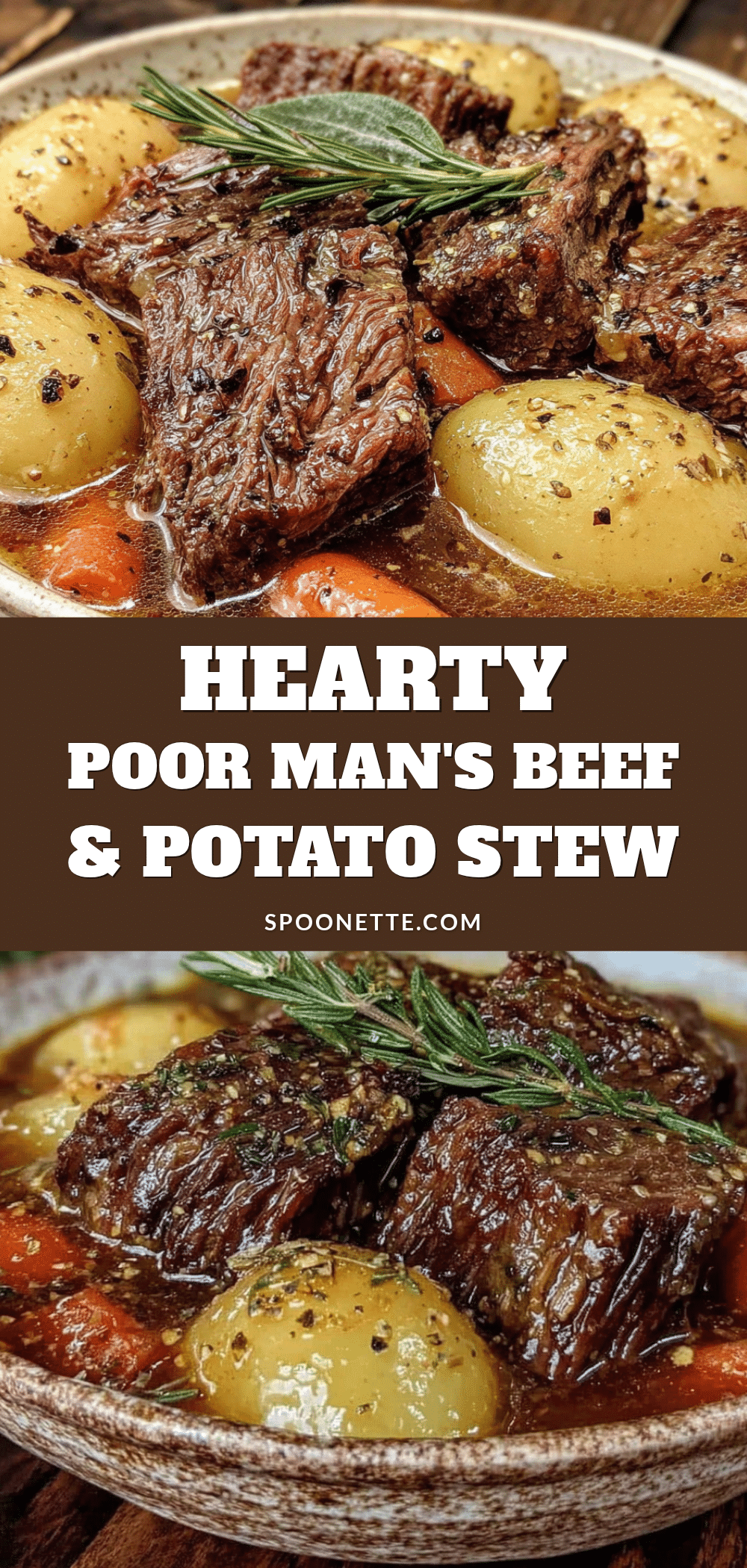
Easy Poor Mans Beef and Potato Stew Recipe

A humble, hearty beef and potato stew that’s quick, easy, and made with simple ingredients. Perfect for busy weeknights or cozy nights in, this comforting stew delivers deep flavor without the fuss.
- Prep Time: 15 minutes
- Cook Time: 35 minutes
- Total Time: 50 minutes
- Yield: 6 servings 1x
- Category: Main Course
- Cuisine: American
Ingredients
- 1.5 lbs (680g) beef chuck or stew meat, cut into 1-inch cubes
- 4 medium Russet potatoes (about 2 lbs / 900g), peeled and diced
- 1 large yellow onion, diced
- 3 garlic cloves, minced
- 2 medium carrots, peeled and sliced
- 2 celery stalks, sliced
- 4 cups (960ml) low-sodium beef broth
- 1 can (14.5 oz / 411g) diced tomatoes, undrained
- 2 tablespoons tomato paste
- 1 tablespoon Worcestershire sauce
- 1 teaspoon dried thyme
- 1/2 teaspoon dried rosemary
- 2 bay leaves
- 2 tablespoons olive oil
- Salt and black pepper to taste
- 2 tablespoons all-purpose flour (optional, for thickening)
- Fresh parsley, chopped (for garnish, optional)
Instructions
- Prep the ingredients: Pat the beef cubes dry with paper towels. Season generously with salt and pepper. Dice the onion, mince the garlic, and slice the carrots and celery. Peel and dice the potatoes into 1-inch cubes. Set everything nearby.
- Brown the beef (5-7 minutes): Heat 1 tablespoon of olive oil in a large Dutch oven over medium-high heat. Add half the beef cubes in a single layer—don’t crowd the pot. Let them sear undisturbed for 2-3 minutes until deeply browned. Flip and brown the other side. Transfer to a plate and repeat with remaining oil and beef.
- Sauté the aromatics (3-4 minutes): Reduce heat to medium. Add the diced onion to the pot and cook for 2 minutes, scraping up any browned bits from the bottom. Add the garlic, carrots, and celery. Cook for another 1-2 minutes until the onions are translucent and the vegetables start to soften.
- Add the tomato paste and seasonings (1 minute): Stir in the tomato paste, dried thyme, and dried rosemary. Cook for 1 minute, stirring constantly.
- Deglaze the pot (1 minute): Pour in the Worcestershire sauce and stir, scraping up any remaining browned bits from the bottom of the pot.
- Add the liquids and beef (5 minutes): Return the browned beef to the pot. Add the beef broth and undrained diced tomatoes. Stir everything together, making sure the beef is mostly submerged. Add the bay leaves.
- Simmer the stew (30-35 minutes): Bring the stew to a gentle boil, then reduce heat to low. Cover and let it simmer for 20 minutes. After 20 minutes, add the diced potatoes. Stir gently, cover again, and simmer for another 10-15 minutes, or until the potatoes are fork-tender.
- Thicken the broth (optional, 2 minutes): If you prefer a thicker stew, mix 2 tablespoons of flour with 3 tablespoons of cold water in a small bowl until smooth. Stir this slurry into the simmering stew and cook for 2-3 minutes until thickened.
- Season and serve: Remove the bay leaves. Taste the stew and adjust salt and pepper as needed. Ladle into bowls and garnish with fresh parsley if desired.
Notes
For best results, don’t skip browning the beef—it builds deep flavor. Pat the beef dry before browning to ensure a good sear. Cut vegetables uniformly for even cooking. Season as you go for layered flavor. The stew tastes even better the next day. For a thicker stew without flour, mash some of the cooked potatoes against the side of the pot.
Nutrition
- Serving Size: 1 serving (about 1.5
- Calories: 385
- Sugar: 7
- Sodium: 680
- Fat: 14
- Saturated Fat: 4
- Carbohydrates: 32
- Fiber: 5
- Protein: 32
Keywords: poor man's stew, beef and potato stew, easy stew recipe, comfort food, budget-friendly stew, hearty stew, one-pot meal