Love this? Save it for later!
Share the inspiration with your friends
I was standing in the grocery store parking lot last Tuesday, fumbling for my keys, when the smell of someone’s lunch—maybe a roasted tomato panini from the café next door—hit me square in the chest. And just like that, I was seven years old again, sitting on the cracked linoleum floor of my aunt Rita’s tiny apartment, watching her pull a sheet pan of halved cherry tomatoes from the oven. The air was thick with that sweet, concentrated smell, and she’d let me dip a crust of bread into the oily, jammy pan juices. It was messy. It was perfect. And honestly? I’ve been chasing that exact moment ever since.
Aunt Rita wasn’t a fancy cook. She used whatever was on sale and she never measured anything. But she understood something about flavor that took me years to really get—that time, not complexity, is what makes a sauce unforgettable. That slow-roasted cherry tomato sauce she made, the one she’d toss with spaghetti on busy weeknights, had this deep, almost caramel-like sweetness. It wasn’t just tomato sauce. It was a hug in a bowl. I forgot to buy garlic that day in the parking lot, which is honestly very on-brand for me, but I didn’t care. I had a plan. I was going to recreate that sauce, properly this time, and share it with you.
This isn’t a throw-together-in-twenty-minutes kind of recipe. It’s better. It’s the kind of sauce that rewards a little patience, that fills your kitchen with a smell that makes your neighbors jealous. You know that feeling when you taste something and you just have to close your eyes for a second? That’s this sauce. Let me show you how to make the best easy slow-roasted cherry tomato sauce for pasta—the one that will ruin jarred sauce for you forever.
Why You’ll Love This Recipe
I’ve tested this slow-roasted cherry tomato sauce more times than I care to admit. I’ve tried different temperatures, different oils, different pans. I’ve burned a batch or two (RIP, those beautiful little tomatoes) and I’ve learned exactly what works. This version is the result of all that trial and error, and let me tell you, it’s the one.
- Deep, Concentrated Flavor: The low and slow method draws out the natural sugars in the tomatoes, creating a sauce that tastes like it simmered all day—without you standing over the stove.
- Simple Ingredients, Big Results: You only need a handful of pantry staples. No cream, no sugar, no weird additives. Just tomatoes, garlic, olive oil, and herbs.
- Hands-Off Cooking: The oven does all the hard work. You chop, you drizzle, you wait. That’s it. Perfect for a lazy Sunday or a busy weeknight when you want something special.
- Incredibly Versatile: Toss it with pasta, spread it on crostini, spoon it over grilled chicken, or use it as a pizza base. This sauce is a workhorse.
- Freezer-Friendly: Make a big batch and stash it away. Future you will be so, so grateful when you need a quick, delicious dinner.
What makes this recipe different from the rest? It’s the technique. Roasting the tomatoes whole with garlic cloves and fresh herbs until they blister and burst, then blending them into a silky, rustic sauce. It’s not just another marinara. It’s a revelation. This is the kind of sauce that makes you feel like a real cook, even if you’re just starting out. It’s comfort food, perfected.
What Ingredients You Will Need
This recipe uses simple, wholesome ingredients to deliver that big, bold flavor without any fuss. Most of these are probably in your kitchen right now, which is part of the beauty of it.
- Cherry Tomatoes (2 pounds / about 900g): The star of the show. Look for firm, ripe cherry tomatoes. I prefer a mix of red and yellow or orange for a more complex flavor and a beautiful final color. If they’re on the vine, that’s fine—just pull them off before roasting. (Pro tip: In the dead of winter, the little grape tomatoes in the plastic clamshells work perfectly too.)
- Garlic (1 whole head, cloves separated and peeled): We’re using an entire head here, not just a few cloves. Roasting mellows the garlic, turning it sweet and buttery. Don’t skip this—it’s non-negotiable for the best flavor.
- Extra-Virgin Olive Oil (⅓ cup / 80ml, plus more for drizzling): Use a good quality oil here, as it’s a major flavor component. I like California Olive Ranch for a reliable, everyday option. It adds richness and helps the tomatoes caramelize beautifully.
- Fresh Basil (a handful of large leaves): Fresh basil stirred in at the end adds a bright, peppery note that balances the sweetness. Dried basil just won’t cut it here, so grab a fresh bunch.
- Fresh Oregano (a few sprigs) or 1 teaspoon dried: Oregano adds an earthy, slightly floral undertone. If using fresh, throw the whole sprigs in the pan—they’ll soften and you can pull the leaves off before blending.
- Dried Red Pepper Flakes (½ teaspoon, or to taste): This is optional, but I love the little warmth it adds. It doesn’t make the sauce spicy, just more interesting. Leave it out if you’re sensitive to heat.
- Salt and Black Pepper (to taste): Don’t be shy with the salt. It’s what makes all those flavors pop. I use a flaky sea salt like Maldon for finishing, but kosher salt is fine for cooking.
- Balsamic Vinegar (1 tablespoon, optional): A tiny splash at the end brightens everything up and adds a touch of acidity. I add it about half the time, depending on how sweet the tomatoes are. Trust your taste buds.
Equipment Needed
You don’t need a ton of fancy gear for this one, which is part of what makes it so great.
- Baking Sheet or Roasting Pan: A half-sheet pan (18×13 inches) is perfect. It gives the tomatoes enough room to roast without steaming each other. I’ve used a rimmed baking sheet for years and it works beautifully.
- Parchment Paper (optional but helpful): Lining the pan makes cleanup a breeze. The caramelized juices can stick, and nobody wants to scrub a baking sheet.
- Chef’s Knife and Cutting Board: For halving the tomatoes. A sharp knife makes this quick work.
- Large Pot: For cooking the pasta. You’ll need at least a 6-quart pot to give the pasta room to move.
- Immersion Blender or Regular Blender: An immersion blender lets you blend the sauce right in the pan, which means less cleanup. If you’re using a regular blender, let the sauce cool slightly first and blend in batches to avoid a hot liquid explosion.
- Wooden Spoon or Silicone Spatula: For stirring everything together.
Preparation Method
Alright, let’s get cooking. Set aside about 2.5 hours for this, but trust me, most of that is the oven doing its thing. You’ll have about 15 minutes of active work.
- Preheat the oven to 300°F (150°C). Yes, that’s low. We’re not blasting these tomatoes; we’re coaxing the sweetness out of them. While the oven heats, line a large baking sheet with parchment paper for easy cleanup.
- Prepare the tomatoes. Rinse and dry your cherry tomatoes. Cut each one in half lengthwise. This is a little tedious, I know, but halving them is crucial. It exposes the flesh, allowing moisture to evaporate and flavors to concentrate. If you leave them whole, they’ll just steam and you’ll end up with watery sauce. Place them cut-side up on the prepared baking sheet. Don’t crowd them too much—a little space between each one helps them roast evenly.
- Add the aromatics. Scatter the peeled garlic cloves and fresh oregano sprigs (if using) around the tomatoes. Drizzle everything generously with the olive oil. Use your hands (clean ones!) to gently toss everything, making sure all the tomatoes are coated. Season with a good pinch of salt and black pepper. I usually use about a teaspoon of salt here.
- Roast low and slow. Slide the pan into the oven and roast for 2 hours to 2 hours and 15 minutes. You’re looking for the tomatoes to be shrunken, wrinkled, and deeply caramelized around the edges. The garlic should be soft and golden. The smell in your kitchen at this point? Unreal. About halfway through, give the pan a gentle shake to redistribute things, but don’t stir them too much—you want that caramelization.
- Cool slightly. Remove the pan from the oven and let it sit for about 10 minutes. This makes the next step safer. If you used fresh oregano sprigs, now is the time to pull them out and discard the stems. The leaves will have fallen off and will be mixed in, which is perfect.
- Blend the sauce. Transfer the roasted tomatoes, garlic, and all those delicious pan juices to a medium bowl or directly into a large saucepan if using an immersion blender. Add the fresh basil leaves and the red pepper flakes (if using). Blend until you reach your desired consistency. I like it mostly smooth but with a few small chunks for texture. If you prefer a super silky sauce, blend longer. If it seems too thick, add a tablespoon or two of pasta cooking water later to loosen it up.
- Finish and season. Taste the sauce. This is the most important step. Does it need more salt? A pinch of black pepper? That splash of balsamic vinegar? Add it now. Stir well. The flavor should be sweet, savory, and incredibly tomato-forward. If it tastes flat, it likely needs more salt.
- Cook the pasta. Bring a large pot of generously salted water to a boil. Cook your pasta of choice (I love this with pappardelle or rigatoni) until al dente. Reserve about 1 cup of the starchy pasta water before draining.
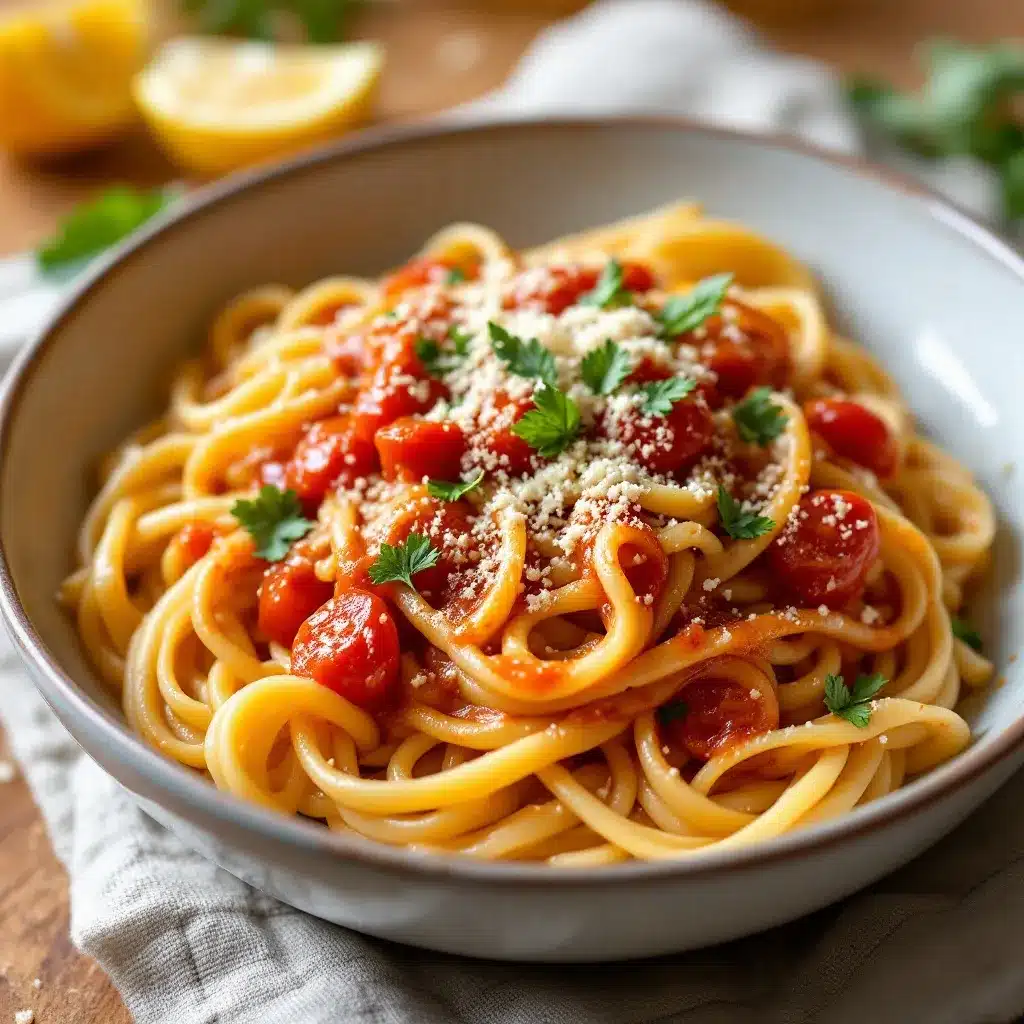
- Combine and serve. Return the drained pasta to the pot. Add the roasted tomato sauce and a splash of the reserved pasta water. Toss over medium-low heat for a minute or two until the sauce coats every piece of pasta. The starch in the water helps the sauce cling beautifully. Serve immediately with a drizzle of good olive oil, some fresh basil leaves, and a generous grating of Parmesan cheese if you like.
Cooking Tips & Techniques
I’ve made this sauce more times than I can count, and I’ve definitely made my share of mistakes. Here’s what I’ve learned so you don’t have to repeat them.
- Don’t rush the roast. I know 2 hours sounds like a long time, but dropping the temperature to 275°F or 300°F is the secret. High heat will char the tomatoes on the outside before they’ve had a chance to soften and sweeten on the inside. Patience is your friend here.
- Watch the garlic. Garlic can go from perfectly roasted to acrid and burnt very quickly. If your garlic cloves are browning faster than the tomatoes (which can happen if they’re very small), just pluck them out of the pan and set them aside. They’ll still be soft enough to blend later.
- Don’t skip the pasta water. This is a cardinal rule of pasta-making. The starchy, salty water is the magic ingredient that turns a good sauce into a great one that clings to every noodle. Add it a little at a time until the sauce looks glossy and cohesive.
- Make it ahead. This sauce actually gets better after a day in the fridge. The flavors meld and deepen. I often make a double batch on Sunday and use it throughout the week. It’s a lifesaver on busy Tuesday nights.
- My biggest failure? I once tried to speed things up by roasting the tomatoes at 400°F. The skins charred and turned bitter, and the sauce had a weird, smoky taste that I couldn’t fix. I ended up ordering pizza. Learn from my impatience.
Variations & Adaptations
This sauce is incredibly flexible. Here are a few ways to make it your own.
- Herb Swap: No fresh basil? No problem. Try fresh thyme or rosemary with the oregano. A couple of sprigs of thyme add a lovely, almost woodsy note. Or stir in a handful of chopped fresh parsley at the end for a cleaner flavor.
- Spicy Arrabbiata Version: Crank up the red pepper flakes to a full teaspoon or even two. You can also add a small, dried chili pepper to the pan while roasting for a deeper, more complex heat.
- Roasted Onion and Tomato Sauce: Add one medium red onion, peeled and cut into 8 wedges, to the baking sheet with the tomatoes. Roast everything together. The onion adds a subtle sweetness and body to the sauce. I do this almost every time now.
- Dairy-Free Creamy Sauce: After blending, stir in ¼ cup of cashew cream or full-fat coconut milk. It won’t be a traditional cream sauce, but it will be luscious and rich. A spoonful of tahini also works wonders.
- Veggie Boost: Toss a couple of halved bell peppers or a handful of zucchini chunks onto the pan with the tomatoes. Roast and blend them in. It’s a great way to sneak extra vegetables into a picky eater’s dinner.
Serving & Storage Suggestions
This sauce is a gift that keeps on giving. Here’s how to enjoy it now and later.
Serving: Serve the pasta piping hot, straight from the pot. A final drizzle of good olive oil, a few fresh basil leaves, and a shower of Parmesan or Pecorino Romano cheese is all you need. It’s also incredible spooned over creamy polenta, grilled chicken, or roasted eggplant. I’ve even used it as a dipping sauce for crusty bread.
Storage: Let any leftover sauce cool completely. Transfer it to an airtight container and store it in the refrigerator for up to 5 days. The flavors will only get better. To freeze, pour the cooled sauce into freezer-safe bags or containers, leaving a little headroom for expansion. It will keep beautifully for up to 3 months. Thaw overnight in the fridge before reheating.
Reheating: Gently reheat the sauce in a saucepan over low heat, stirring occasionally. If it seems too thick, thin it out with a splash of water or pasta cooking water. You can also reheat it directly with freshly cooked pasta. I don’t recommend microwaving it, as it can heat unevenly and lose some of its texture.
Nutritional Information & Benefits
This sauce is not only delicious but also packed with good-for-you ingredients. Here’s a rough estimate per serving (about ½ cup of sauce, not including pasta).
- Calories: ~120
- Fat: 9g (mostly from heart-healthy olive oil)
- Carbohydrates: 10g
- Fiber: 3g
- Sugar: 6g (natural, from tomatoes)
- Protein: 2g
- Vitamin C: 30% of your daily needs
- Vitamin A: 20% of your daily needs
Cherry tomatoes are rich in lycopene, a powerful antioxidant linked to heart health and reduced inflammation. Cooking them actually makes the lycopene more absorbable by your body. The olive oil provides healthy monounsaturated fats, and the garlic is a natural immune booster. This is one of those rare recipes that feels indulgent and nourishing at the same time.
Conclusion
This slow-roasted cherry tomato sauce is more than just a recipe. It’s a little bit of kitchen magic. It’s the smell that fills your home on a quiet afternoon, the taste that makes you slow down and savor every bite. It’s proof that you don’t need a dozen ingredients or a culinary degree to create something truly special. You just need good tomatoes, a little patience, and the willingness to let the oven do its work.
I hope you make this sauce and make it your own. Maybe you’ll add a pinch of something unexpected, or serve it over a pasta shape I never thought of. That’s the beauty of cooking, isn’t it? Please come back and tell me how it turned out. Leave a comment below, share a photo, or tag me on social media. I genuinely love hearing from you. Now go preheat that oven—your new favorite pasta sauce is waiting.
Frequently Asked Questions
Can I use grape tomatoes instead of cherry tomatoes?
Absolutely. Grape tomatoes are a bit firmer and less juicy, so they might take an extra 15-20 minutes in the oven. They’ll still produce a delicious sauce.
Do I have to peel the roasted garlic?
Nope! After roasting, the garlic cloves become so soft that they’ll blend right into the sauce, skin and all. The skins are perfectly edible and add a little extra fiber.
Can I make this in a slow cooker?
You can, but the texture will be different. The sauce will be more stewed and less caramelized. To try it, combine all ingredients in a slow cooker and cook on low for 6-8 hours. Blend at the end.
How do I get a thicker sauce?
If your sauce is too thin after blending, simply simmer it in a saucepan over medium-low heat for 10-15 minutes, stirring occasionally. The excess moisture will evaporate and it will thicken up nicely.
Can I use dried herbs instead of fresh?
Yes, but use about one-third of the amount. Dried herbs are more concentrated. Add them to the pan with the tomatoes so they can rehydrate and release their flavor during roasting.
Pin This Recipe!
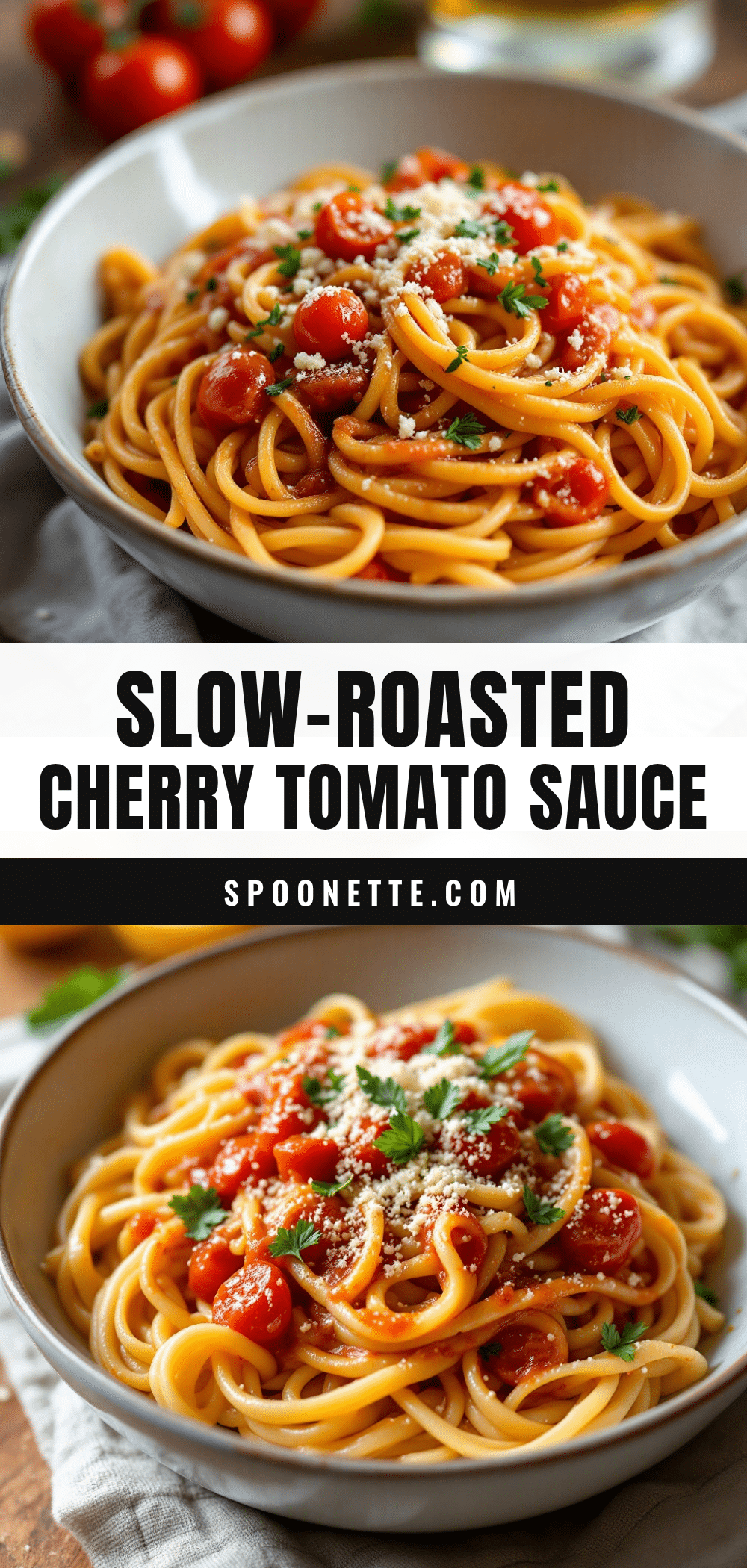
Best Easy Slow-Roasted Cherry Tomato Sauce for Pasta
This slow-roasted cherry tomato sauce is deeply flavorful, sweet, and savory, made with simple ingredients and hands-off oven time. It’s perfect for pasta, crostini, or as a versatile base for many dishes.
- Prep Time: 15 minutes
- Cook Time: 2 hours 15 minutes
- Total Time: 2 hours 30 minutes
- Yield: 4 servings 1x
- Category: Main Course
- Cuisine: Italian
Ingredients
- 2 pounds (about 900g) cherry tomatoes, halved
- 1 whole head garlic, cloves separated and peeled
- ⅓ cup (80ml) extra-virgin olive oil, plus more for drizzling
- A handful of fresh basil leaves
- A few sprigs fresh oregano (or 1 teaspoon dried)
- ½ teaspoon dried red pepper flakes (optional, or to taste)
- Salt and black pepper to taste
- 1 tablespoon balsamic vinegar (optional)
Instructions
- Preheat the oven to 300°F (150°C). Line a large baking sheet with parchment paper.
- Rinse and dry the cherry tomatoes. Cut each in half lengthwise and place cut-side up on the prepared baking sheet.
- Scatter the peeled garlic cloves and fresh oregano sprigs (if using) around the tomatoes. Drizzle with olive oil, toss gently to coat, and season with salt and pepper.
- Roast for 2 hours to 2 hours 15 minutes, until tomatoes are shrunken, wrinkled, and caramelized. Garlic should be soft and golden.
- Remove from oven and let cool for 10 minutes. Discard oregano stems if used.
- Transfer roasted tomatoes, garlic, and pan juices to a bowl or saucepan. Add fresh basil and red pepper flakes (if using). Blend with an immersion blender or regular blender until desired consistency.
- Taste and adjust seasoning with salt, pepper, and balsamic vinegar if desired.
- Cook pasta in generously salted water until al dente. Reserve 1 cup pasta water before draining.
- Return drained pasta to pot. Add sauce and a splash of pasta water. Toss over medium-low heat for 1-2 minutes until sauce coats pasta.
- Serve immediately with a drizzle of olive oil, fresh basil, and grated Parmesan if desired.
Notes
Don’t rush the roast; low temperature is key for sweetness. Watch the garlic to prevent burning. Reserve pasta water to help sauce cling. Sauce can be made ahead and refrigerated for up to 5 days or frozen for 3 months.
Nutrition
- Serving Size: ½ cup sauce (not inc
- Calories: 120
- Sugar: 6
- Sodium: 300
- Fat: 9
- Saturated Fat: 1.5
- Carbohydrates: 10
- Fiber: 3
- Protein: 2
Keywords: slow-roasted cherry tomato sauce, pasta sauce, cherry tomato, roasted tomato, easy pasta sauce, homemade marinara