Love this? Save it for later!
Share the inspiration with your friends
“I swear I only meant to grab a couple of steaks,” I muttered to myself while juggling five heavy bags of meat at the checkout. You know that feeling when the butcher’s special looks too good to pass up, and suddenly your cart is overflowing? That was me last Saturday afternoon at the farmer’s market, trying to balance a box of chicken thighs, a couple of pork loins, and a mysterious package of ground beef I didn’t even plan for. Honestly, it was chaos — I even dropped a package on the floor and had to sheepishly ask the vendor for a fresh one.
At first, I panicked. How on earth was I going to use or store all this meat without it going to waste? I didn’t have a fancy freezer system or hours to spend cooking everything right away. But after a bit of trial and error (and a few late-night kitchen experiments), I found some cozy, practical ways to freeze and use this accidental meat overload that saved both my sanity and my wallet.
Maybe you’ve been there, standing in front of your freezer wondering how much longer that chicken can last or whether ground beef can be frozen without losing flavor. This guide is exactly for those moments — when the fridge is full, the freezer is half-packed, and you need smart, no-fuss solutions that keep your meals tasty and your kitchen organized. Stick with me, and I’ll share the best way to freeze meat properly, how to thaw it safely, and some delicious recipes you can whip up with what you’ve got on hand.
By the time you finish reading, I promise you’ll feel ready to handle any surprise meat haul with confidence — and maybe even a little joy. Because, honestly, a cozy kitchen and a well-stocked freezer can be a lifesaver on those busy or unexpected days.
Why You’ll Love This Recipe
This isn’t just about freezing meat; it’s about making your life easier and your meals more satisfying. I’ve tested these tips and tricks after more than a few kitchen mishaps, and they’re family-approved and kitchen-tested, perfect for anyone who’s ever faced the “accidental meat overload” dilemma.
- Quick & Easy: Learn how to freeze meat in under 10 minutes with simple prep so you can get it done before you lose steam.
- Simple Ingredients: No complicated marinades or fancy gadgets — just meat, your freezer, and a bit of know-how.
- Perfect for Busy Days: Whether it’s a hectic weeknight or a surprise guest, having properly frozen meat means dinner’s ready whenever you are.
- Crowd-Pleaser: Recipes included are guaranteed to get thumbs up from both kids and adults — comfort food that feels like a hug on a plate.
- Unbelievably Delicious: Freezing meat the right way preserves flavor and texture, so your meals don’t taste like a freezer aisle mishap.
This guide stands out because it’s not just a list of do’s and don’ts — it’s a cozy, realistic approach with practical tips you can trust. Plus, the recipe ideas embrace whatever you accidentally bought, making sure nothing goes to waste. Honestly, it’s the kind of advice you wish you’d had years ago (and maybe you’ll want to share it with a friend who’s as prone to meat haul mishaps as I am!).
What Ingredients You Will Need
This guide focuses on the meat you’ve already bought — but here’s what typically works best for freezing and cooking later:
- Meats for Freezing:
- Beef cuts (steaks, ground beef, roasts)
- Pork cuts (chops, loins, ground pork)
- Chicken parts (breasts, thighs, wings, whole chicken)
- Turkey (ground or whole pieces)
- Lamb (chops, ground lamb)
- Packaging Supplies:
- Freezer-safe zip-top bags (I like the quart and gallon sizes for flexibility)
- Plastic wrap or butcher paper (for extra protection)
- Permanent marker for labeling
- Optional Ingredients for Recipes:
- Garlic, onions, and herbs (adds flavor to thawed meat dishes)
- Low-sodium broth or stock (for stews or braises)
- Olive oil or butter (for sautéing or searing)
Most of these are pantry staples or easily found at any local market. When selecting meat, look for cuts with minimal packaging damage — a little tear can cause freezer burn faster. I usually pick Smithfield pork or local grass-fed beef when I can, but honestly, whatever you find on sale or that you accidentally bought works just fine.
If you want to freeze meat for longer than a couple of months, thicker cuts wrapped tightly in plastic wrap and then sealed in a freezer bag help preserve freshness. For ground meats, flattening the portion in the bag before freezing makes thawing faster and easier. Quick tip: label everything with the date and what’s inside — trust me, after a few weeks, you’ll be glad you did!
Equipment Needed
Freezing and making the most of your meat haul doesn’t require fancy gear, but a few essentials help:
- Freezer-Safe Bags: Heavy-duty zip-top bags are your best friend. I recommend brands like Ziploc or Stasher for reliable sealing and durability.
- Plastic Wrap or Butcher Paper: Wrapping meat first prevents freezer burn. Butcher paper adds a nice breathable layer if you want to avoid plastic.
- Permanent Marker: Labeling packages is crucial. I keep a sharpie near the freezer for quick notes.
- Vacuum Sealer (Optional): If you want to get fancy, vacuum sealing extends freezer life and prevents air exposure. But honestly, it’s not necessary unless you freeze meat often.
- Freezer Thermometer: To check your freezer stays at 0°F (-18°C) or below — keeping meat safe and fresh.
If you don’t have a vacuum sealer, no worries — double wrapping and squeezing out excess air works just fine. For budget options, reusing clean glass jars or containers can be handy for ground meat or smaller portions, but airtight bags are usually easier.
Preparation Method
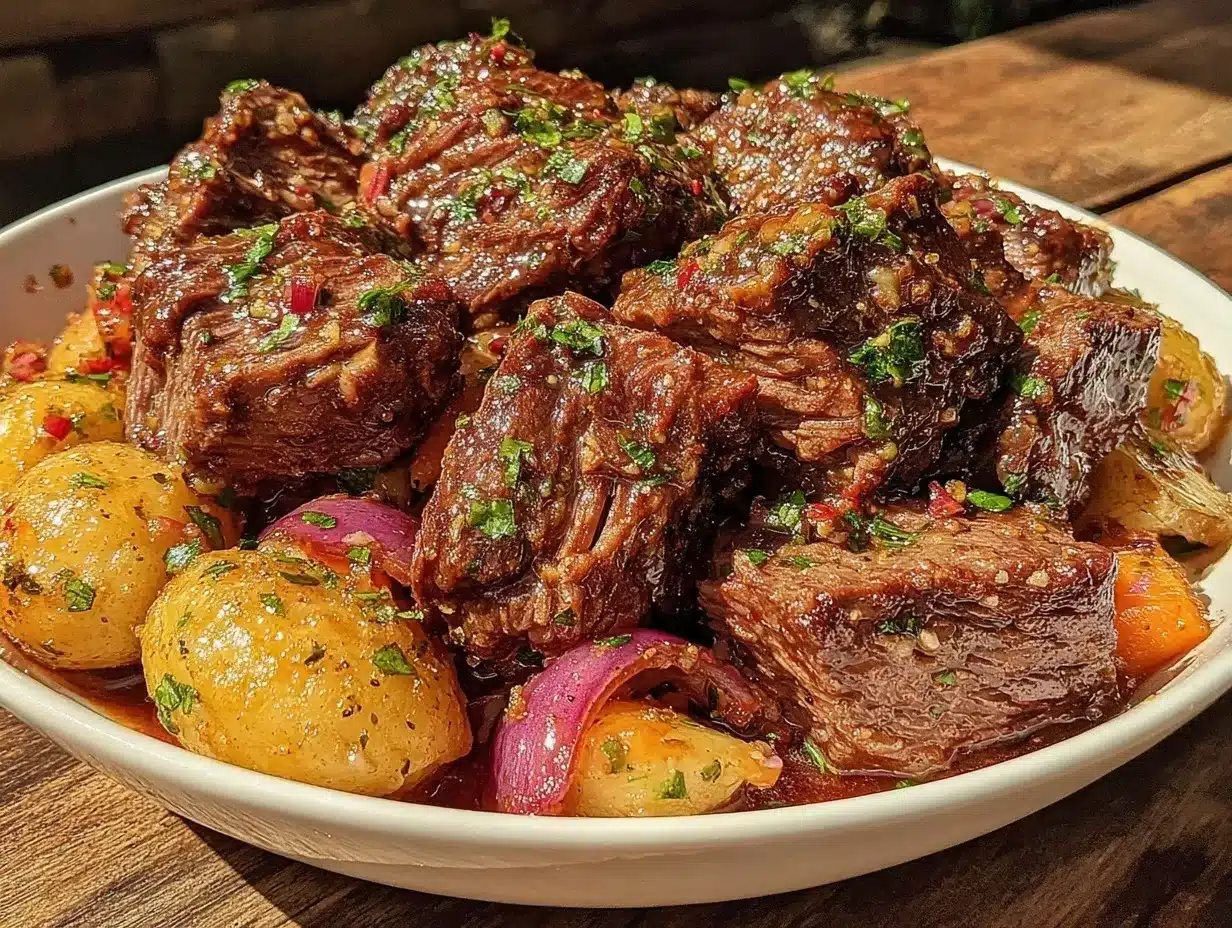
- Sort and Portion: Start by separating your meat into meal-sized portions. For example, if you bought a large pork loin, slice it into chops or roasts depending on your future plans. Aim for portions that suit your usual family size — I usually do 1 to 1.5 pounds (450 to 680 grams) per package.
Estimated time: 10-15 minutes. - Wrap Properly: For each portion, wrap tightly in plastic wrap or butcher paper. This extra layer helps prevent freezer burn and keeps moisture in. If you’re using butcher paper, fold edges securely.
Estimated time: 5 minutes. - Bag It Up: Place wrapped meat into freezer-safe zip bags. Squeeze out as much air as possible before sealing — this is key to maintaining quality.
Tip: Lay the bag flat to save freezer space.
Estimated time: 5 minutes. - Label Everything: Write the meat type, portion size, and date on the bag with a permanent marker. I usually add a quick note like “pork chops, 1 lb, frozen 9/22” to keep track.
Estimated time: 2 minutes. - Freeze Quickly: Lay the bags flat in your freezer so they freeze evenly and stack easily. Avoid overloading the freezer to keep cold air circulating.
Tip: The faster the meat freezes, the better the texture when thawed.
Estimated time: Immediate after packaging. - Thaw Safely: When ready to use, thaw meat in the refrigerator overnight or use the cold water method (sealed in a bag submerged in cold water, changing water every 30 minutes). Avoid thawing at room temperature to prevent bacteria growth.
Estimated time: Varies by portion size — 8-24 hours in fridge. - Cook with Confidence: Use thawed meat in your favorite recipes — from slow cooker stews to quick skillet dinners. If you want a warming cozy meal, I love making a hearty beef stew with frozen beef chunks straight from the freezer.
Tip: Some meats like ground beef can even be cooked from frozen if you adjust cooking time.
Remember, the key is to package well and label clearly. I once forgot to mark a bag, and it became a freezer mystery for months — not fun! Also, keep an eye on your freezer temperature; if it creeps above 0°F, meat quality can degrade faster.
Cooking Tips & Techniques
Cooking meat that was frozen properly can be just as delightful as fresh, but a few tips can make a big difference:
- Pat Dry After Thawing: Moisture is the enemy when searing meat. Always pat thawed meat dry with paper towels before cooking to get that perfect crust.
- Don’t Refreeze Thawed Meat: Once meat is thawed, cook it before refreezing. This prevents texture loss and keeps you safe.
- Use Marinades Wisely: Marinating meat before freezing can add flavor, but if you forget, no worries — marinate after thawing for at least 30 minutes.
- Adjust Cooking Times: Frozen or partially thawed meat takes longer to cook. For example, frozen chicken breasts need about 50% more cooking time.
- Slow Cooker Magic: Tough cuts like pork shoulder or beef chuck work wonderfully in slow cookers straight from frozen — just add extra cooking time.
- Quick Thaw Hacks: In a pinch, use the microwave’s defrost setting but watch carefully to avoid starting to cook the edges.
One time I tried to skip drying the meat after thawing and ended up with a steamed rather than seared steak — lesson learned! Also, multitasking by prepping sides while meat thaws overnight saves tons of time on busy nights.
Variations & Adaptations
Not all meats freeze or cook the same, so here are some ways to tailor your approach:
- For Poultry: Freeze whole chickens or parts separately. You can stuff and season before freezing for a quick roast later.
- Ground Meats: Freeze in thin, flat bags for quick thawing and easy portioning. Swap ground beef for turkey or chicken in recipes for leaner options.
- Marinated Meat: Freeze meat already marinated for convenience. I tried this with a spicy pork marinade and was thrilled by the flavor boost after freezing.
- Seasonal Adaptations: In summer, freeze meat with fresh herbs from the garden inside the packaging for a subtle fresh note.
- Allergen-Friendly: Use coconut aminos instead of soy-based marinades if dealing with allergies before freezing.
For the slow cooker fans, frozen meat works perfectly if you add extra cooking time, but for quick skillet meals, thawing first is best for even cooking. I once swapped a beef stew recipe to use frozen lamb chunks instead — slightly gamier but equally cozy and delicious!
Serving & Storage Suggestions
When it comes to serving, freshly thawed meat feels like a treat, especially when paired with simple sides. I love serving my frozen-thawed chicken thighs with roasted root vegetables or a crisp salad to balance the richness.
Store frozen meat at 0°F (-18°C) or below, ideally using within 3-6 months for best flavor. Labeling helps you rotate stock so nothing lingers too long. If you freeze too much, portioning smaller bags for single meals is a lifesaver.
For leftovers, refrigerate cooked meat within two hours and consume within 3-4 days. Reheat gently in the oven or on the stovetop to maintain texture. I find that letting flavors develop overnight in the fridge (like in soups or stews) makes meals even tastier.
Nutritional Information & Benefits
The nutritional profile varies by meat type, but generally, frozen meat retains most nutrients if stored properly. Protein content remains high, essential for muscle repair and energy. For example, 3 ounces (85 grams) of cooked chicken breast offers about 25 grams of protein and minimal fat.
Freezing meat doesn’t reduce vitamins like B12 or iron, which are crucial for energy and immune health. Choosing lean cuts and trimming fat before freezing can reduce calorie intake while keeping meals satisfying.
This approach is great for balanced diets, allowing you to control portions and plan meals ahead. Just watch for added sodium if you’re freezing pre-marinated or processed meats.
Conclusion
Accidentally buying too much meat doesn’t have to be stressful or lead to waste. With the right freezing techniques and smart meal planning, you’ll turn that surplus into cozy, delicious meals that fit perfectly into your busy life. I love this approach because it’s practical, saves money, and keeps my kitchen feeling welcoming — no matter how many packages I bring home.
Feel free to customize the methods to your own freezer and favorite cuts. And hey, if you try these tips or have your own tricks, I’d love to hear about them in the comments below! Let’s keep the conversation going and help each other stay cozy and well-fed no matter what lands in our carts.
Here’s to a freezer full of promise and a kitchen ready for anything!
FAQs
How long can you freeze meat safely?
Most meats keep best for 3-6 months at 0°F (-18°C). Ground meats and poultry usually last about 4 months, while steaks and roasts can last up to 12 months if packaged well.
Can you freeze meat that’s already cooked?
Yes! Cooked meat freezes well and can be stored for 2-3 months. Just cool it completely before packaging and label clearly.
What’s the best way to thaw frozen meat?
Thaw meat overnight in the refrigerator for safety. For quicker thawing, use the cold water method with sealed bags or microwave defrost on low power with caution.
Does freezing meat affect its flavor?
If properly packaged to prevent freezer burn, freezing preserves flavor well. Poor wrapping or long storage can cause off flavors or dry texture.
Can I freeze marinated meat?
Absolutely! Marinating before freezing can intensify flavors. Just be sure to freeze in airtight containers or bags and label with the marinade type and date.
Pin This Recipe!
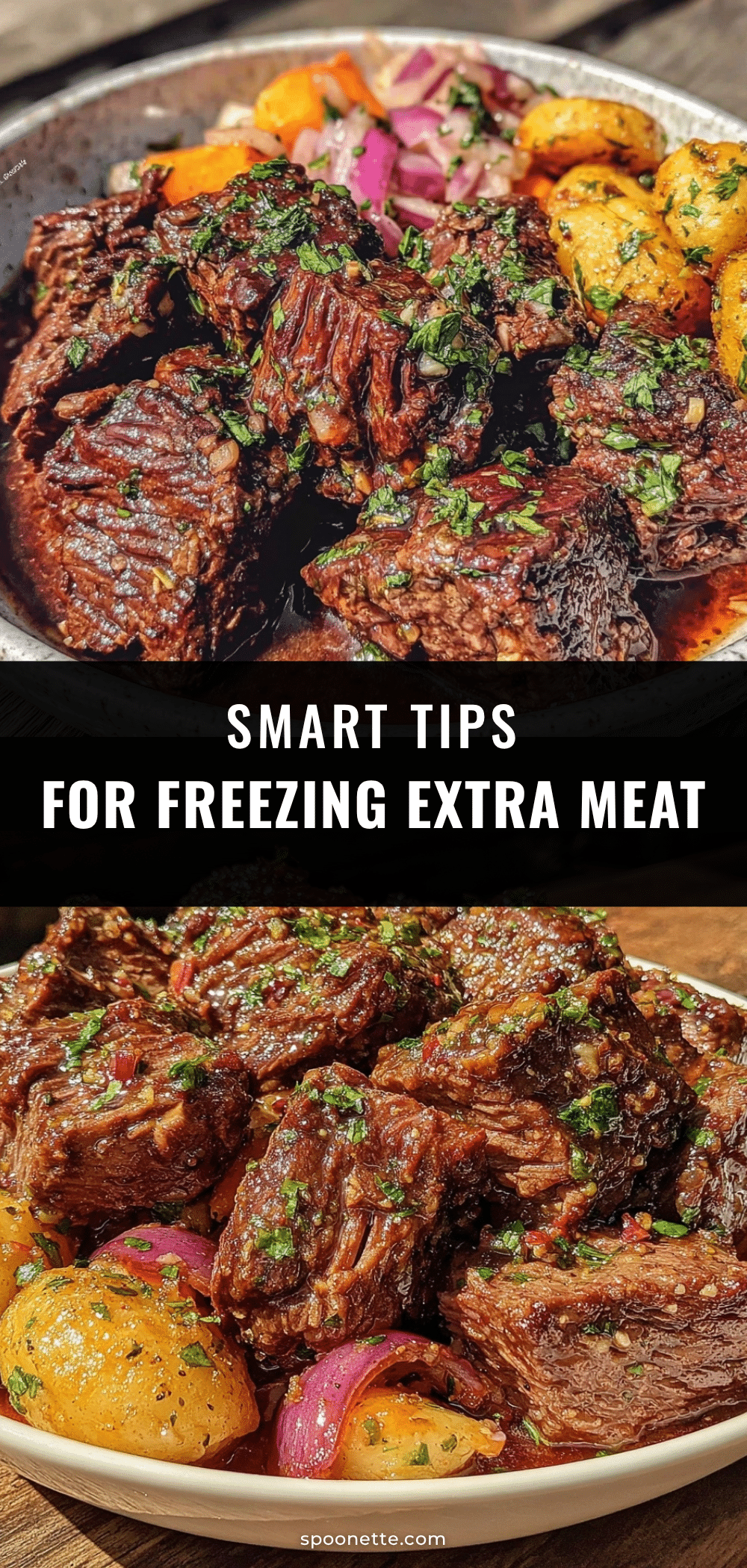
Cozy Accidentally Bought Too Much Meat How to Freeze or Use It Best

A practical guide to freezing and using surplus meat efficiently, with tips on packaging, thawing, and cooking to preserve flavor and texture.
- Prep Time: 15 minutes
- Cook Time: Varies depending on recipe
- Total Time: Varies depending on recipe
- Yield: Varies depending on portion size
- Category: Food Storage Guide
- Cuisine: General
Ingredients
- Beef cuts (steaks, ground beef, roasts)
- Pork cuts (chops, loins, ground pork)
- Chicken parts (breasts, thighs, wings, whole chicken)
- Turkey (ground or whole pieces)
- Lamb (chops, ground lamb)
- Freezer-safe zip-top bags (quart and gallon sizes)
- Plastic wrap or butcher paper
- Permanent marker for labeling
- Optional: Garlic, onions, and herbs
- Optional: Low-sodium broth or stock
- Optional: Olive oil or butter
Instructions
- Sort and portion meat into meal-sized packages, about 1 to 1.5 pounds per package.
- Wrap each portion tightly in plastic wrap or butcher paper to prevent freezer burn.
- Place wrapped meat into freezer-safe zip-top bags, squeezing out as much air as possible before sealing.
- Label each bag with meat type, portion size, and date using a permanent marker.
- Lay bags flat in the freezer to freeze quickly and stack easily.
- Thaw meat safely by refrigerating overnight or using the cold water method; avoid thawing at room temperature.
- Cook thawed meat in your favorite recipes; some meats like ground beef can be cooked from frozen with adjusted cooking times.
Notes
Label packages clearly with date and contents to avoid freezer mystery bags. Pat meat dry after thawing before cooking to improve searing. Do not refreeze thawed meat. Adjust cooking times for frozen or partially thawed meat. Vacuum sealing is optional but extends freezer life.
Nutrition
- Serving Size: Approximately 1 to 1
- Protein: 25
Keywords: freezing meat, how to freeze meat, thawing meat, meat storage, freezer tips, cooking frozen meat, meat preservation