Love this? Save it for later!
Share the inspiration with your friends
This was supposed to be a batch of classic cake donuts. I had the plan all mapped out—flour, sugar, butter, a splash of vanilla. But somewhere between the first ingredient and the fryer, I grabbed the wrong jug from the fridge. Instead of plain milk, I poured in a generous glug of fresh apple cider I’d bought for a weekend breakfast. I realized it about three seconds too late, standing there with a stream of golden cider hitting the flour mixture. Honestly, I almost dumped the whole thing and started over. But the dough was already coming together, and I was running late for a phone call with my sister. So I shrugged, muttered something under my breath, and kept mixing.
The batter looked a little looser than usual, and I remember thinking, “Well, these are going to be a mess.” I scooped out small rounds, dropped them into the hot oil, and braced for the worst. What came out of that bubbling pot was nothing like the plan—and so much better. They puffed up into perfect little golden spheres, and the smell drifting through my kitchen was pure autumn. I mean, it was like someone bottled a crisp October afternoon and fried it. I stood there, holding a warm donut hole, and just laughed at myself. You know that feeling when you mess up and somehow stumble into something amazing?
That happy accident turned into my go-to fall treat. These apple cider donut holes have that soft, tender crumb you want, and the brown sugar cinnamon coating adds a little crunch and a lot of warmth. I’ve made them for neighbors, for my book club, and for lazy Sunday mornings when I just need a cozy win. Maybe you’ve been there—when a recipe goes sideways and ends up being the one you keep coming back to. That’s this one for me.
Why You’ll Love This Recipe
After countless batches and a few more accidental spills (I’m a slow learner in the kitchen), I can tell you these apple cider donut holes deliver every single time. They’re not just another fried dough recipe—they’ve got that certain something that makes people hover around the kitchen counter waiting for the next batch to cool.
- Quick & Easy: From mixing bowl to plate in under 30 minutes. No yeast, no rising time, no complicated steps. Perfect for when that donut craving hits hard.
- Simple Ingredients: You probably have most of these in your pantry right now. The apple cider is the star, and the rest is basic baking stuff. No fancy extracts or hard-to-find flours.
- Perfect for Fall Gatherings: These little guys are the life of the party at pumpkin carving nights, bonfires, and Thanksgiving morning breakfasts. They disappear fast.
- Crowd-Pleaser: I’ve watched kids and adults alike polish off a plate in minutes. The combination of apple flavor and that warm brown sugar coating is basically irresistible.
- Unbelievably Delicious: The texture is what gets me every time. Crispy on the outside, soft and almost cake-like on the inside, with that concentrated apple cider taste running through every bite.
What makes this recipe different from every other donut hole recipe out there? It’s the way the apple cider gets reduced slightly during mixing, creating a deeper, more concentrated flavor. I’ve tested this with store-bought cider and fresh-pressed from a local orchard, and both work beautifully. Plus, the brown sugar cinnamon coating isn’t just a dusting—it sticks to the warm donut holes like a cozy blanket, giving you that sweet, spiced hit with every bite.
This recipe is comfort food reimagined. It’s faster than a trip to the donut shop, but it has that homemade soul that makes you close your eyes after the first bite. Perfect for impressing guests without stress, or turning a simple Saturday morning into something memorable.
What Ingredients You Will Need
This recipe uses simple, wholesome ingredients to deliver that cozy apple cider flavor and satisfying texture without any fuss. Most of these are pantry staples, and the few fresh items are easy to find during apple season.
- Apple Cider (1 cup / 240 ml) – The heart of the recipe. Use fresh, unfiltered apple cider for the best flavor. I’ve tried this with apple juice in a pinch, but the cider gives a much richer, tangier taste. Look for a brand that’s cloudy and dark, not clear.
- All-Purpose Flour (2 cups / 250 grams) – Standard all-purpose flour works perfectly here. Spoon and level it into your measuring cup for the right texture. Don’t pack it down, or your donut holes will be dense.
- Granulated Sugar (½ cup / 100 grams) – Adds sweetness to the batter and helps with browning. I use regular white sugar, but organic cane sugar works too.
- Brown Sugar (⅓ cup / 70 grams, packed) – For the coating. I prefer dark brown sugar here—it has more molasses flavor, which pairs beautifully with the cinnamon. Light brown sugar works if that’s what you have.
- Baking Powder (2 teaspoons) – The leavening agent that gives these donut holes their lift. Make sure it’s fresh—test it by dropping a bit in warm water; it should bubble immediately.
- Baking Soda (½ teaspoon) – Helps neutralize the acidity of the apple cider and adds extra fluffiness.
- Salt (½ teaspoon) – Balances the sweetness and enhances the apple flavor. I use fine sea salt.
- Ground Cinnamon (1½ teaspoons) – Divided. One teaspoon goes into the batter, and the remaining half teaspoon goes into the coating. Use a good-quality cinnamon like Ceylon or Saigon for the best aroma.
- Ground Nutmeg (¼ teaspoon) – Optional, but I love the subtle warmth it adds. Freshly grated is amazing if you have a whole nutmeg.
- Egg (1 large, room temperature) – Binds the batter together. Let it sit out for 15 minutes if you forgot to take it out ahead of time.
- Butter (2 tablespoons, melted and slightly cooled) – Adds richness and tenderness to the dough. I use salted butter, but unsalted works too—just add an extra pinch of salt.
- Vanilla Extract (1 teaspoon) – A little goes a long way in rounding out the flavors. Pure vanilla extract is worth it here.
- Oil for Frying (about 4 cups / 1 liter of vegetable or canola oil) – You need enough oil to submerge the donut holes. Vegetable oil has a neutral flavor and a high smoke point, making it ideal for frying.
Equipment Needed
You don’t need a lot of fancy gear for this recipe, which is part of what makes it so approachable. Here’s what you’ll need:
- Large Mixing Bowl – For combining the dry ingredients. Any medium-to-large bowl will do.
- Medium Mixing Bowl – For whisking the wet ingredients together.
- Whisk – A standard wire whisk works for both the dry and wet mixtures.
- Wooden Spoon or Rubber Spatula – For folding the batter together. Don’t overmix, so a gentle hand with a spatula is your friend.
- Deep Pot or Dutch Oven – For frying. A heavy-bottomed pot like a Dutch oven holds heat evenly and prevents temperature fluctuations. I use my old enameled cast iron pot, and it works like a charm.
- Candy or Deep-Fry Thermometer – This is crucial. Guessing the oil temperature leads to greasy or burnt donut holes. A simple clip-on thermometer costs about $10 and saves so much frustration.
- Small Cookie Scoop or Two Spoons – For portioning the dough. A 1-tablespoon scoop makes perfectly uniform donut holes. If you don’t have one, just use two spoons to shape them.
- Slotted Spoon or Spider Strainer – For removing the donut holes from the hot oil. A spider strainer is my favorite—it lets the oil drain quickly.
- Paper Towels – For draining excess oil after frying. Set up a plate lined with a few layers.
- Shallow Bowl or Pie Plate – For the brown sugar cinnamon coating. Something wide enough to roll the warm donut holes in.
- Cooling Rack (optional) – If you’re making a big batch, a rack helps them cool evenly without getting soggy on the bottom.
If you don’t have a Dutch oven, any deep, heavy pot will work. Just make sure it’s deep enough to hold the oil with room for the donut holes to float without hitting the bottom.
Preparation Method
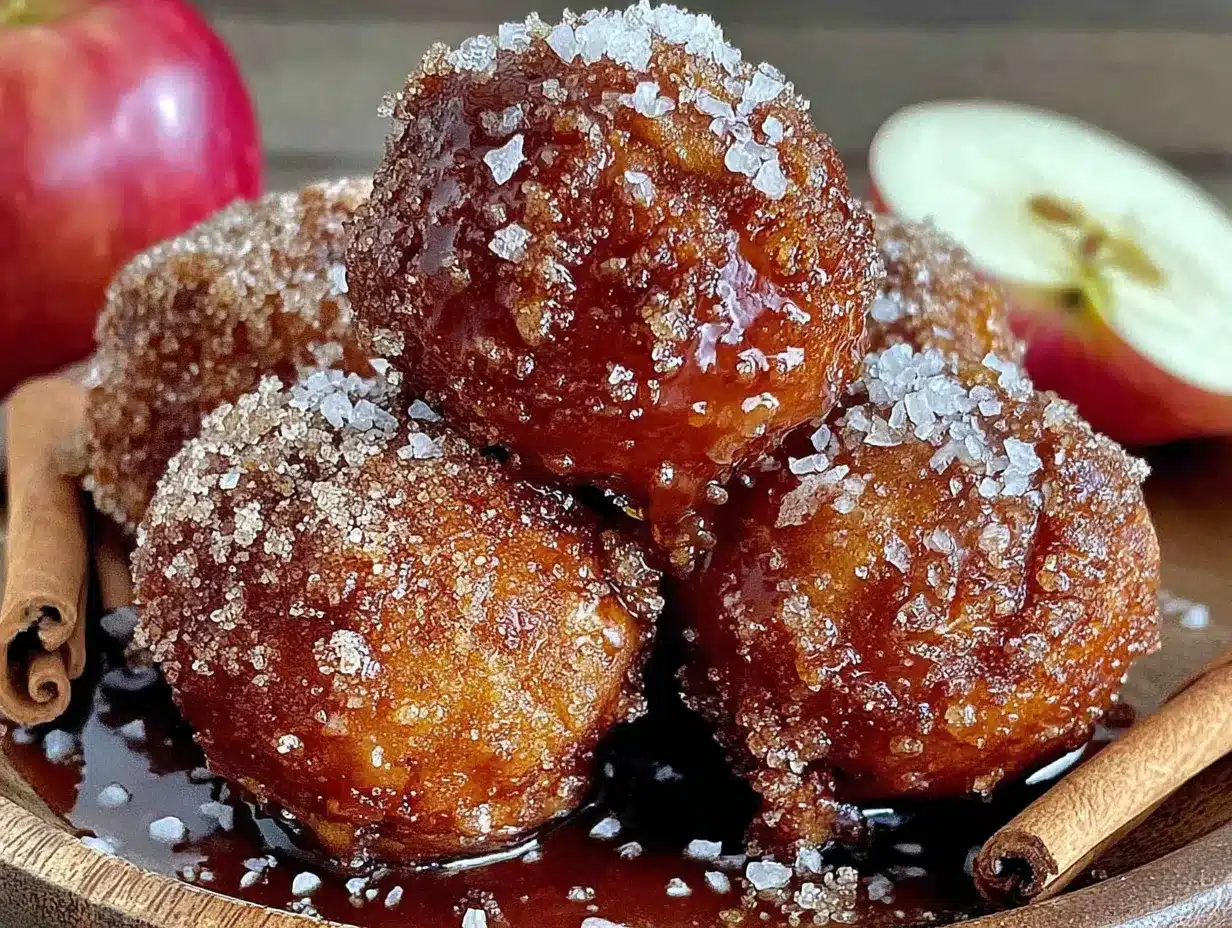
Let’s get these apple cider donut holes made! The process is straightforward, but a few little tricks make all the difference. I’ll walk you through each step.
- Prepare the dry ingredients. In a large mixing bowl, whisk together 2 cups all-purpose flour, ½ cup granulated sugar, 2 teaspoons baking powder, ½ teaspoon baking soda, ½ teaspoon salt, 1 teaspoon ground cinnamon, and ¼ teaspoon nutmeg (if using). Whisk until everything is evenly distributed. This takes about 30 seconds. The baking powder and soda need to be well incorporated so your donut holes rise evenly.
- Mix the wet ingredients. In a separate medium bowl, crack 1 large egg and beat it lightly with a fork. Add 1 cup apple cider, 2 tablespoons melted butter (make sure it’s not hot, just warm), and 1 teaspoon vanilla extract. Whisk until the egg is fully incorporated and the mixture looks smooth. The cider might make it look a little foamy—that’s fine.
- Combine wet and dry. Pour the wet mixture into the dry ingredients. Stir gently with a wooden spoon or rubber spatula until just combined. Stop as soon as you don’t see any more streaks of flour. A few small lumps are okay. Overmixing will make the donut holes tough, and nobody wants that. The batter will be soft and slightly sticky, almost like a thick cake batter.
- Heat the oil. Pour about 4 cups of vegetable oil into your deep pot. Heat it over medium heat until it reaches 350°F (175°C). Use your thermometer to monitor it closely. While the oil heats, line a plate with paper towels and set up your coating bowl with the brown sugar and cinnamon mixture (we’ll make that in a moment).
- Shape the donut holes. Once the oil is hot, use a small cookie scoop or two spoons to drop rounded tablespoons of batter into the oil. Work in batches of 5-6 donut holes at a time. Don’t overcrowd the pot—they need room to float and expand. The batter will be sticky, so lightly oil your scoop if needed.
- Fry until golden. Fry the donut holes for 2-3 minutes total, turning them once halfway through with your slotted spoon. They should be deep golden brown on all sides. The first batch always takes a little longer as the oil adjusts. Keep an eye on the temperature—it might drop when you add the batter, so adjust the heat as needed.
- Drain and cool slightly. Use your slotted spoon to transfer the fried donut holes to the paper towel-lined plate. Let them drain for about 30 seconds to a minute. They’ll be very hot, so don’t skip this step.
- Make the coating. While the first batch drains, mix ⅓ cup packed brown sugar and ½ teaspoon ground cinnamon in a shallow bowl. Stir with a fork to break up any lumps in the brown sugar.
- Coat while warm. While the donut holes are still warm (but not scorching hot), roll them in the brown sugar mixture one at a time. Use your fingers or a fork to coat them evenly. The warmth helps the sugar stick and creates that lovely crunchy coating. Transfer the coated donut holes to a cooling rack or a clean plate.
- Repeat with remaining batter. Continue frying the rest of the batter in batches, letting the oil come back to 350°F between batches. Coat each batch immediately after draining. Serve warm for the best texture and flavor.
A note on timing: The whole process from start to finish takes about 25-30 minutes. The actual frying goes fast, so I like to have everything ready before I drop the first scoop of batter. It makes the process feel smooth and relaxed instead of frantic.
Cooking Tips & Techniques
I’ve made these apple cider donut holes more times than I can count, and I’ve definitely learned a few things the hard way. Here are my best tips to help you nail them on the first try.
Keep the oil temperature steady. This is the number one thing that affects the final texture. If the oil is too cool, the donut holes absorb grease and turn heavy. If it’s too hot, they brown on the outside before the inside cooks through. I keep my thermometer clipped to the pot and check it between every batch. A little fluctuation is normal, but try to stay within 340-360°F.
Don’t skip the resting step for the batter. I know it’s tempting to drop the batter right after mixing, but letting it sit for 2-3 minutes allows the flour to fully hydrate and the baking powder to start working. You’ll get fluffier donut holes this way. I learned this after a batch that came out flat and dense—never again.
Use a light hand when mixing. I’ve ruined plenty of baked goods by overmixing, and donut batter is no exception. Stir until the flour disappears, then stop. Those little lumps are okay—they’ll smooth out during frying. Overmixing develops gluten, which makes the donut holes tough and chewy instead of tender.
Test the oil with a tiny drop of batter. Before you commit to a full batch, drop a small piece of batter into the oil. If it sizzles immediately and floats to the surface within 10 seconds, the oil is ready. If it sinks and sits at the bottom, wait a bit longer. This little test has saved me from many greasy donut holes.
Work in small batches. I know it’s tempting to fry a dozen at once, but overcrowding drops the oil temperature too much. Stick to 5-6 per batch. They’ll cook faster and more evenly, and you’ll get that perfect golden color every time.
Coat immediately after draining. The brown sugar mixture sticks best when the donut holes are still warm. If you let them cool completely, the coating just slides off. I keep my coating bowl right next to the draining plate so I can roll them while they’re still hot.
Variations & Adaptations
One of the best things about this recipe is how flexible it is. I’ve played around with different flavors and methods, and here are some of my favorite variations.
Baked version. If you’re not into deep frying, you can bake these! Preheat your oven to 375°F (190°C). Grease a mini muffin tin well (don’t skimp on the grease—they stick). Fill each cup about ¾ full with batter. Bake for 8-10 minutes, until the tops are golden and a toothpick comes out clean. Roll them in the brown sugar coating while still warm. They won’t be as crispy as the fried version, but they’re still delicious and much lighter.
Spiced chai twist. Replace the cinnamon and nutmeg in the batter with 1½ teaspoons of chai spice blend (or make your own with cardamom, ginger, cloves, and black pepper). The warm, aromatic spices pair beautifully with the apple cider. I made this version last December, and it became an instant holiday favorite.
Gluten-free option. Substitute the all-purpose flour with a 1:1 gluten-free baking flour blend that contains xanthan gum. I’ve tested this with Bob’s Red Mill 1:1 Baking Flour, and the texture was surprisingly close to the original. Just be careful not to overmix, as gluten-free batters can get gummy if handled too much.
Maple glaze coating. Instead of the brown sugar cinnamon coating, whisk together 1 cup powdered sugar, 2 tablespoons maple syrup, and 1-2 tablespoons milk (or apple cider) until smooth. Dip the warm donut holes in the glaze and let them set on a wire rack. This version is sweeter and has that classic maple-apple combo that’s just perfect for fall.
Add-ins for texture. Fold in ⅓ cup of finely chopped pecans or walnuts into the batter before frying. The nuts add a lovely crunch and a toasty flavor that complements the apple cider. I’ve also tried adding ¼ cup of dried apple pieces (chopped very small), which gives little bursts of chewy apple in every bite.
Serving & Storage Suggestions
These apple cider donut holes are best served warm, right after coating. That’s when the outside is slightly crispy and the inside is soft and tender. I like to pile them on a big plate or a wooden board, sometimes with a small bowl of extra brown sugar cinnamon mixture for dipping (because why not?).
For drinks, a hot cup of spiced apple cider or a dark roast coffee is the perfect companion. They also go wonderfully with a tall glass of cold milk—especially if you’re serving them to kids. If you’re feeling fancy, drizzle a little caramel sauce over the top and add a pinch of flaky sea salt.
Storage: If you have leftovers (which honestly doesn’t happen often in my house), store them in an airtight container at room temperature for up to 2 days. The coating might soften a bit, but they’ll still taste great. Don’t refrigerate them—the fridge dries them out and makes them stale faster.
Freezing: You can freeze the uncoated donut holes for up to 2 months. Let them cool completely after frying, then place them in a single layer on a baking sheet and freeze until solid. Transfer to a freezer-safe bag or container. To serve, reheat them in a 350°F oven for 5-7 minutes, then roll in the brown sugar coating while warm.
Reheating: The best way to reheat these is in a 350°F oven for about 5 minutes. The microwave works in a pinch (15-20 seconds), but they’ll lose that slight crispiness. If you’re reheating a batch for a gathering, I like to pop them in the oven just before serving so they come out warm and fresh-tasting.
One thing I’ve noticed is that the flavors actually deepen a little after a day. The apple cider taste becomes more pronounced, and the brown sugar coating gets slightly gooey in the best way. They’re still delicious the next morning with your coffee.
Nutritional Information & Benefits
Let’s be real—these are donut holes, not a health food. But I believe in balance, and a treat made with real ingredients is always better than something processed from a box. Here’s a rough estimate per donut hole (based on a batch of about 24):
- Calories: 110-130
- Fat: 6-7 grams
- Carbohydrates: 14-16 grams
- Sugar: 8-10 grams
- Protein: 1-2 grams
These numbers will vary depending on how much oil gets absorbed and the exact brands you use. The baked version comes in lower, around 80-90 calories per piece.
On the plus side, apple cider contains antioxidants called polyphenols, which are linked to various health benefits. Cinnamon is known for its anti-inflammatory properties and can help regulate blood sugar. And honestly, the biggest benefit here is the joy of making something from scratch and sharing it with people you love. That counts for something, right?
If you’re watching your sugar intake, you can reduce the coating amount or use a sugar substitute like monk fruit sweetener in the coating. The donut holes themselves aren’t overly sweet, so the coating is where most of the sugar lives.
These are a nut-free recipe as written, but check your ingredients if you have allergies. The gluten-free version is a great option for those with celiac disease or gluten sensitivity.
Conclusion
These apple cider donut holes are the kind of recipe that makes you look forward to fall all year long. They came from a mistake, but honestly, they’re better than anything I could have planned. The combination of soft, apple-infused dough and that crunchy brown sugar cinnamon coating is pure comfort in a bite-sized package.
I hope you give them a try, whether you’re making them for a cozy weekend breakfast, a Halloween party, or just because the weather turned chilly and you need something warm. Don’t be afraid to make them your own—swap in different spices, try the baked version, or double the coating if you’re feeling extra generous.
I’d love to hear how they turn out for you! Drop a comment below and let me know if you made any fun variations, or share a photo of your batch on Pinterest. Tag me so I can see your cozy creations. Until next time, happy frying—and remember, the best recipes often start with a happy accident.
Frequently Asked Questions
Can I use apple juice instead of apple cider?
You can, but the flavor won’t be as rich. Apple cider is unfiltered and has a tangier, more concentrated apple taste. Apple juice is sweeter and milder. If you only have juice, reduce the sugar in the batter by 2 tablespoons to balance the sweetness.
Why did my donut holes turn out greasy?
Greasy donut holes usually mean the oil wasn’t hot enough. When the oil is below 340°F, the batter absorbs too much oil before it cooks through. Make sure your thermometer is accurate and let the oil come back to temperature between batches.
Can I make the batter ahead of time?
I don’t recommend it. The baking powder starts reacting as soon as it hits the wet ingredients, so the batter is best used immediately. If you need to prep ahead, mix the dry and wet ingredients separately and combine them right before frying.
How do I get the coating to stick better?
The key is coating the donut holes while they’re still warm, but not too hot to handle. Let them drain for about 30-60 seconds after frying, then roll them immediately. If the coating isn’t sticking, try pressing it gently into the surface with your fingers.
Can I double this recipe?
Absolutely! This recipe doubles beautifully. Just make sure you fry in batches and keep the oil temperature steady. You might need a little more oil to maintain the depth. The coating mixture can be doubled easily too—just use ⅔ cup brown sugar and 1 teaspoon cinnamon.
Pin This Recipe!

Easy Homemade Apple Cider Donut Holes
These apple cider donut holes are soft, tender, and coated in a crunchy brown sugar cinnamon mixture. A happy accident turned into the perfect fall treat, ready in under 30 minutes.
- Prep Time: 10 minutes
- Cook Time: 15 minutes
- Total Time: 25 minutes
- Yield: 24 donut holes 1x
- Category: Dessert
- Cuisine: American
Ingredients
- 1 cup (240 ml) apple cider
- 2 cups (250 g) all-purpose flour
- 1/2 cup (100 g) granulated sugar
- 1/3 cup (70 g) packed brown sugar (for coating)
- 2 teaspoons baking powder
- 1/2 teaspoon baking soda
- 1/2 teaspoon salt
- 1 1/2 teaspoons ground cinnamon (divided: 1 tsp for batter, 1/2 tsp for coating)
- 1/4 teaspoon ground nutmeg (optional)
- 1 large egg, room temperature
- 2 tablespoons melted butter, slightly cooled
- 1 teaspoon vanilla extract
- About 4 cups (1 liter) vegetable or canola oil for frying
Instructions
- In a large mixing bowl, whisk together flour, granulated sugar, baking powder, baking soda, salt, 1 teaspoon cinnamon, and nutmeg (if using).
- In a separate medium bowl, beat the egg lightly. Add apple cider, melted butter, and vanilla extract. Whisk until smooth.
- Pour the wet mixture into the dry ingredients. Stir gently with a wooden spoon or rubber spatula until just combined. Do not overmix; a few lumps are okay.
- Heat vegetable oil in a deep pot or Dutch oven to 350°F (175°C). Line a plate with paper towels.
- Using a small cookie scoop or two spoons, drop rounded tablespoons of batter into the hot oil. Fry in batches of 5-6, turning once, until deep golden brown, about 2-3 minutes total.
- Transfer fried donut holes to the paper towel-lined plate to drain for 30-60 seconds.
- In a shallow bowl, mix together the packed brown sugar and remaining 1/2 teaspoon cinnamon.
- While still warm, roll the donut holes in the brown sugar mixture until evenly coated.
- Repeat with remaining batter, letting the oil return to 350°F between batches. Serve warm.
Notes
Keep oil temperature steady between 340-360°F. Let batter rest for 2-3 minutes before frying for fluffier donut holes. Coat immediately after draining for best adhesion. For a baked version, bake in a greased mini muffin tin at 375°F for 8-10 minutes.
Nutrition
- Serving Size: 1 donut hole
- Calories: 120
- Sugar: 9
- Sodium: 95
- Fat: 6.5
- Saturated Fat: 1.5
- Carbohydrates: 15
- Fiber: 0.5
- Protein: 1.5
Keywords: apple cider donut holes, fall dessert, fried donuts, easy donut recipe, brown sugar cinnamon