Essential Baking Science: What Happens If You Skip Dough Resting Steps
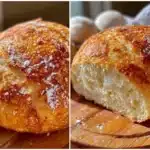
This recipe explains the importance of dough resting in baking, detailing how skipping this step affects bread texture and flavor. It provides a basic yeast dough recipe with tips for perfect results.
- Prep Time: 15 minutes
- Cook Time: 20-30 minutes
- Total Time: 2 hours 45 minutes
- Yield: 1 loaf (about 8 servings) 1x
- Category: Main Course
- Cuisine: American
Ingredients
Scale
- 4 cups (500g) all-purpose flour or bread flour
- 1 1/3 cups (325ml) lukewarm water (100-110°F / 38-43°C)
- 2 1/4 teaspoons (7g) active dry yeast
- 1 1/2 teaspoons (10g) salt
- 1 tablespoon (15ml) olive oil (optional)
- 1 teaspoon sugar (optional)
Instructions
- Combine flour, lukewarm water, active dry yeast, salt, and olive oil if using in a mixing bowl. Stir until a shaggy dough forms, about 5 minutes.
- Knead the dough on a lightly floured surface for 8-10 minutes until smooth and elastic. Add flour if too sticky but keep dough soft.
- Place dough in a lightly oiled bowl, cover with plastic wrap or a damp towel, and let rest at room temperature for 1 to 2 hours until doubled in size.
- Punch down the dough gently to release large gas bubbles, then shape into desired form (loaf, rolls, pizza base).
- Let the shaped dough rest again, covered, for 30 to 60 minutes for the final rise.
- Preheat oven to 425°F (220°C). Bake dough for 20-30 minutes until crust is golden and sounds hollow when tapped. Let cool before slicing.
Notes
Use a cozy, draft-free spot around 70-75°F (21-24°C) for resting dough. Cover dough well to prevent drying out. Punch down dough after first rise to redistribute yeast and sugars. Adjust resting times for whole wheat or gluten-free flours. Cold ferment overnight for deeper flavor.
Nutrition
- Serving Size: 1 slice (about 50g)
- Calories: 125140
- Sugar: 0.51
- Sodium: 150200
- Fat: 11.5
- Saturated Fat: 0.2
- Carbohydrates: 22.525
- Fiber: 11.5
- Protein: 3.54
Keywords: bread, dough resting, baking science, yeast dough, homemade bread, bread recipe, pizza dough, baking tips